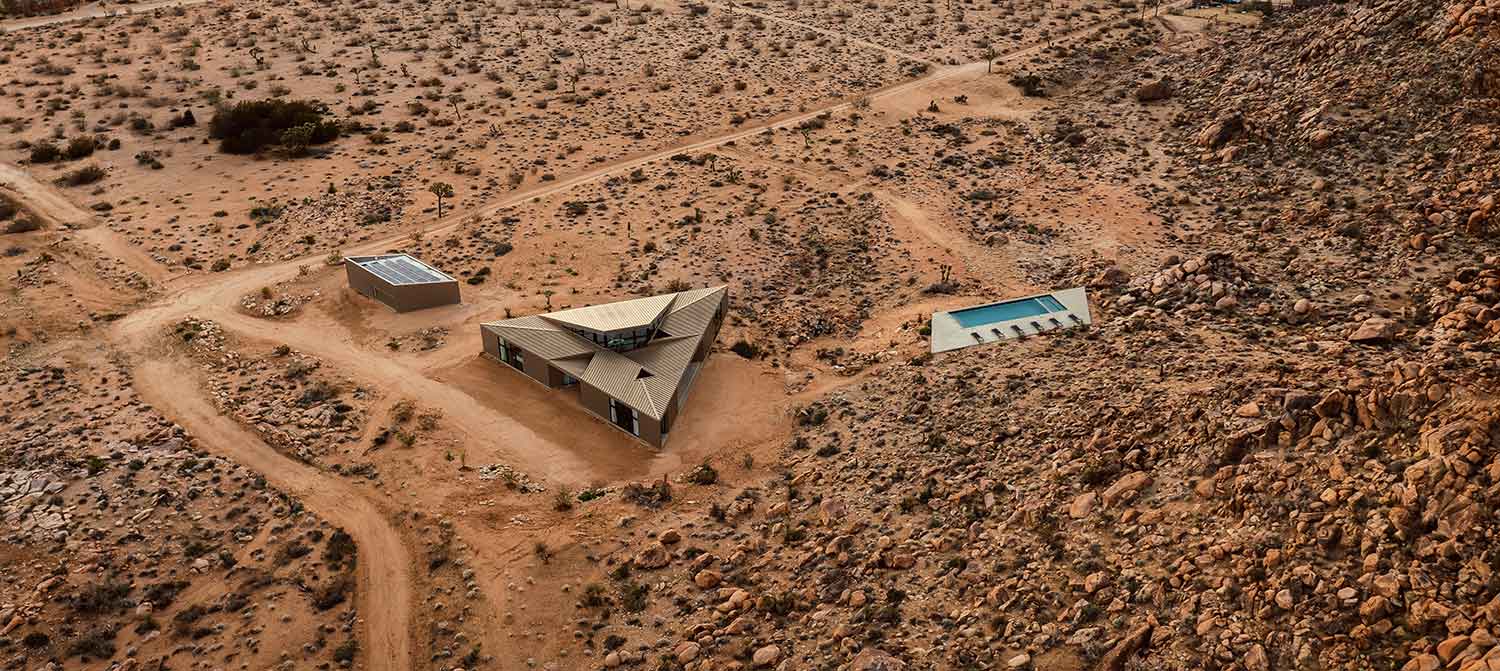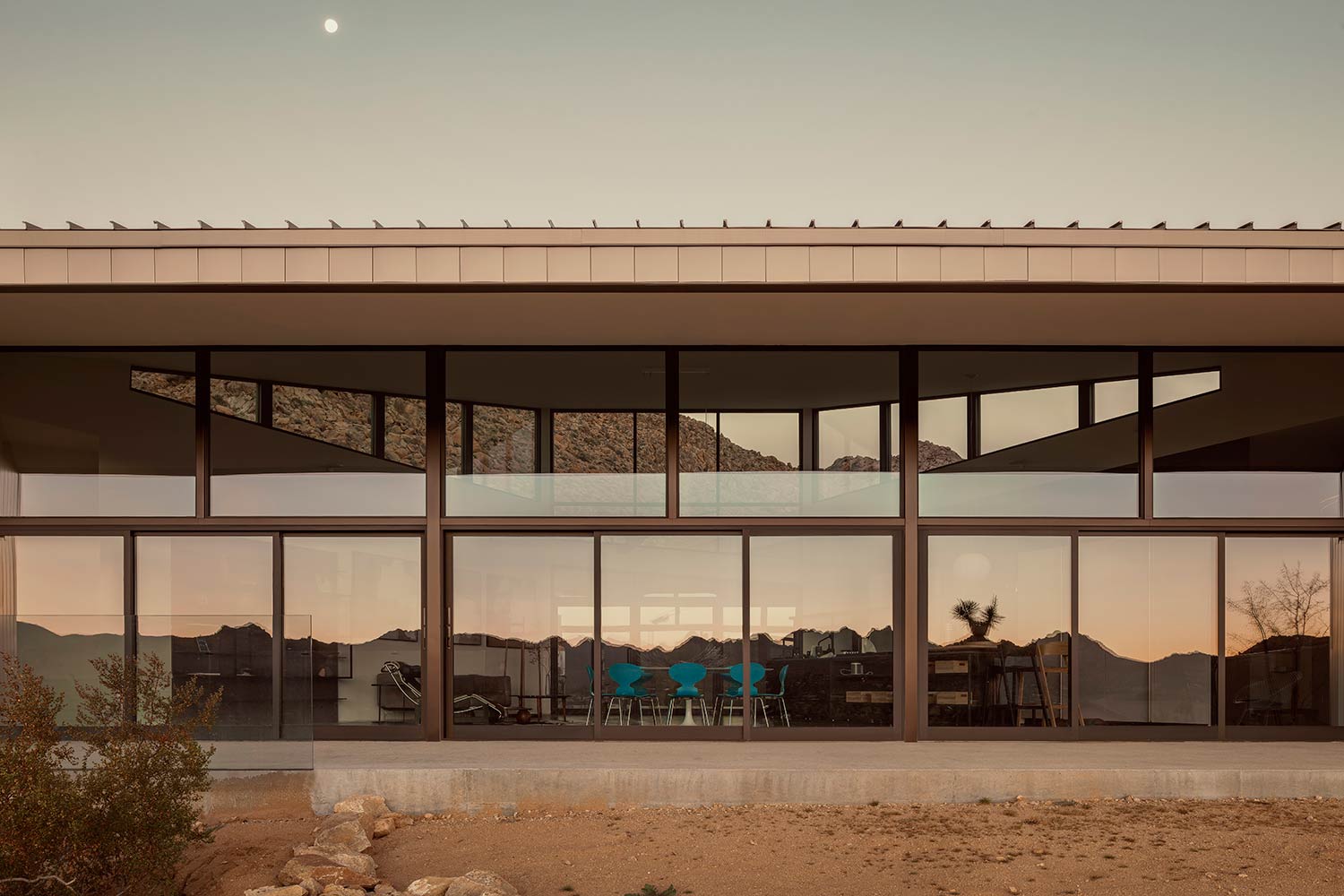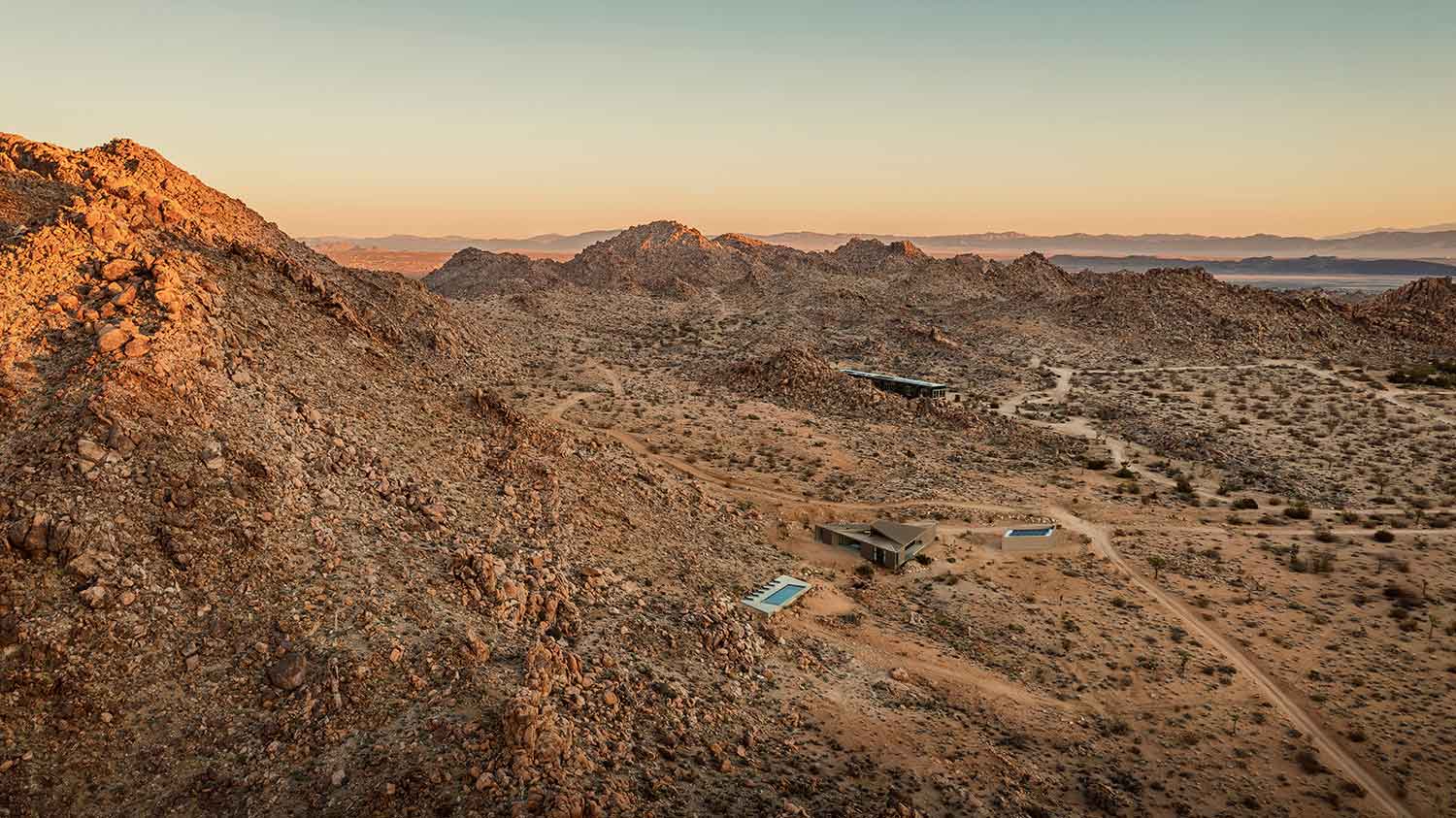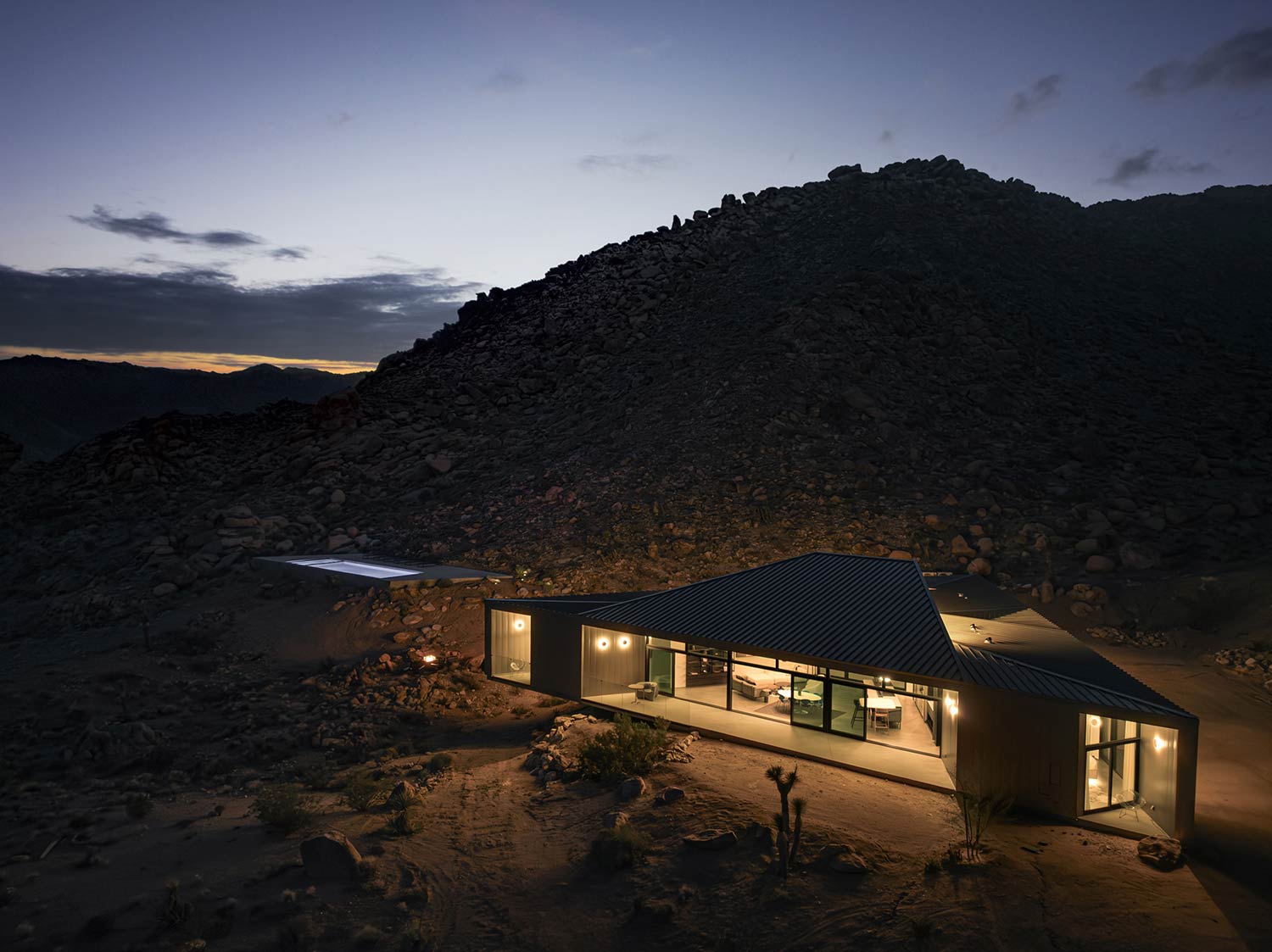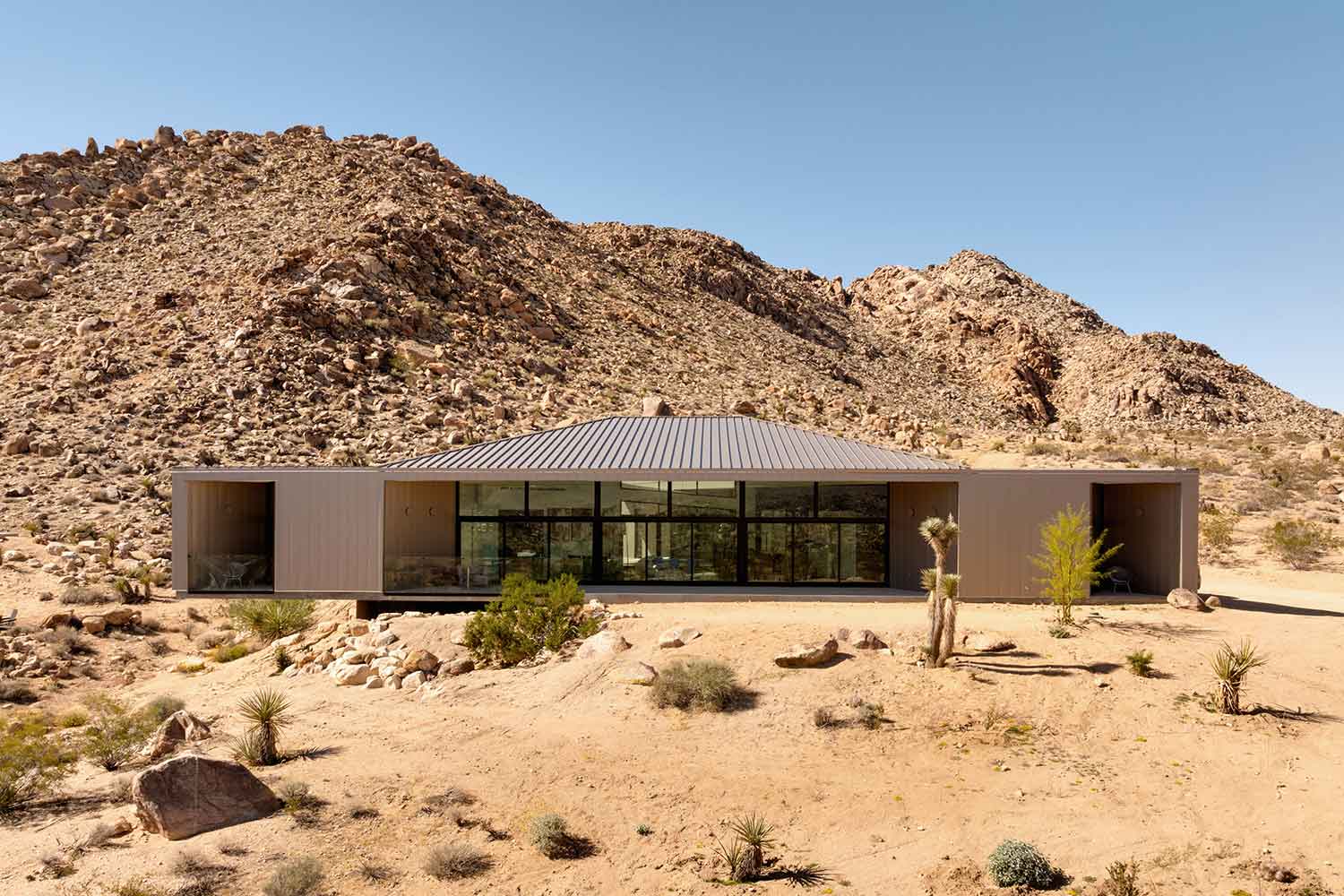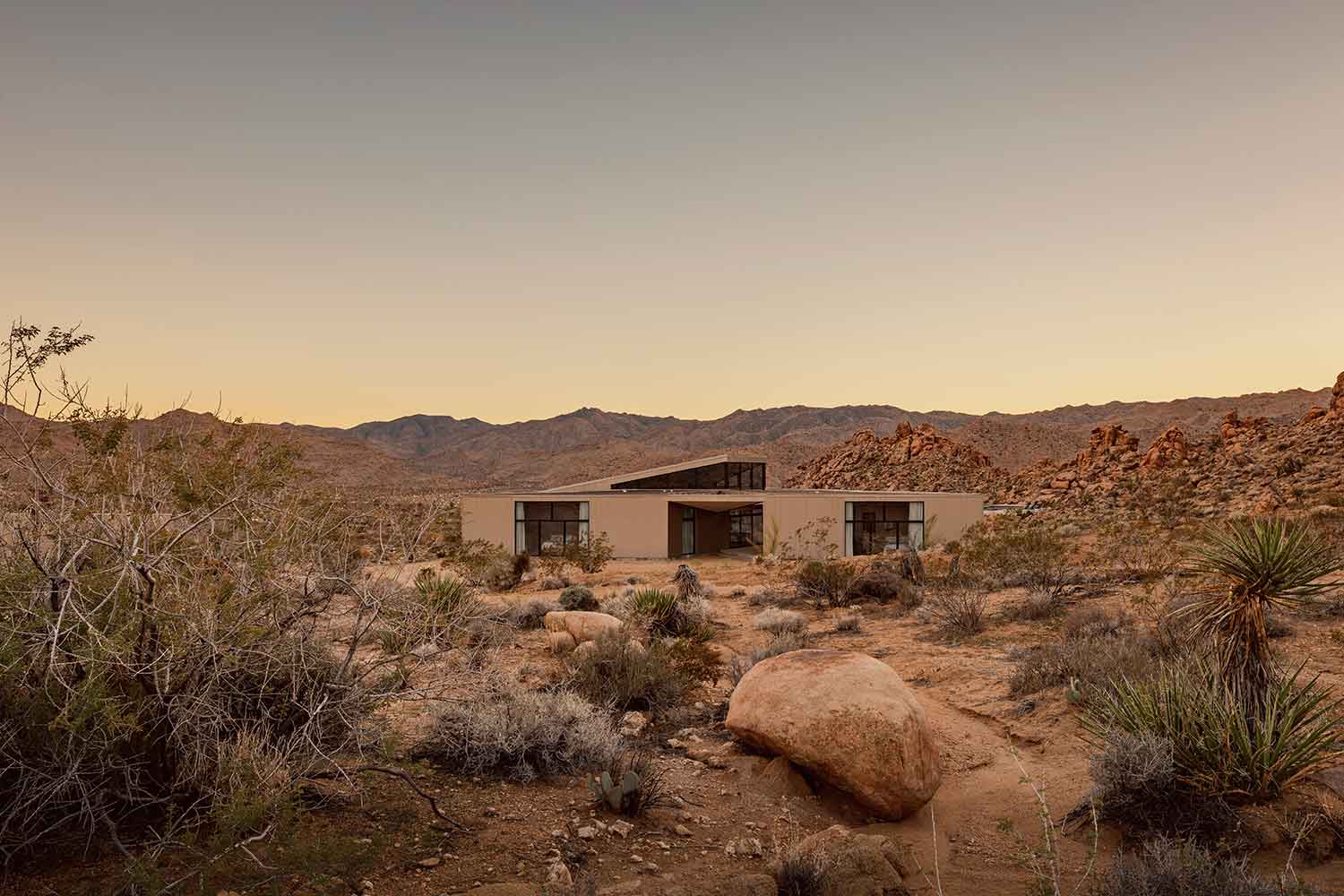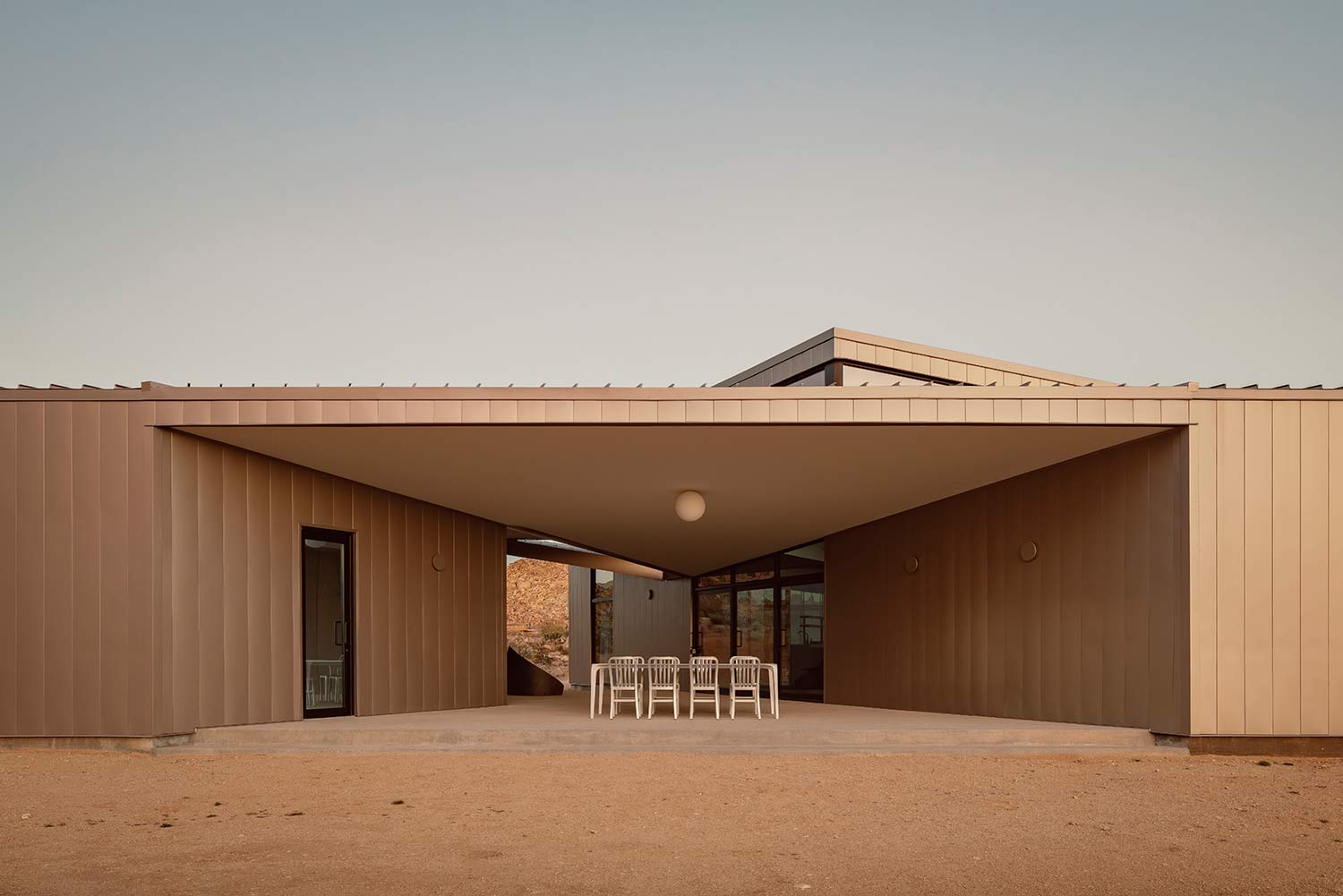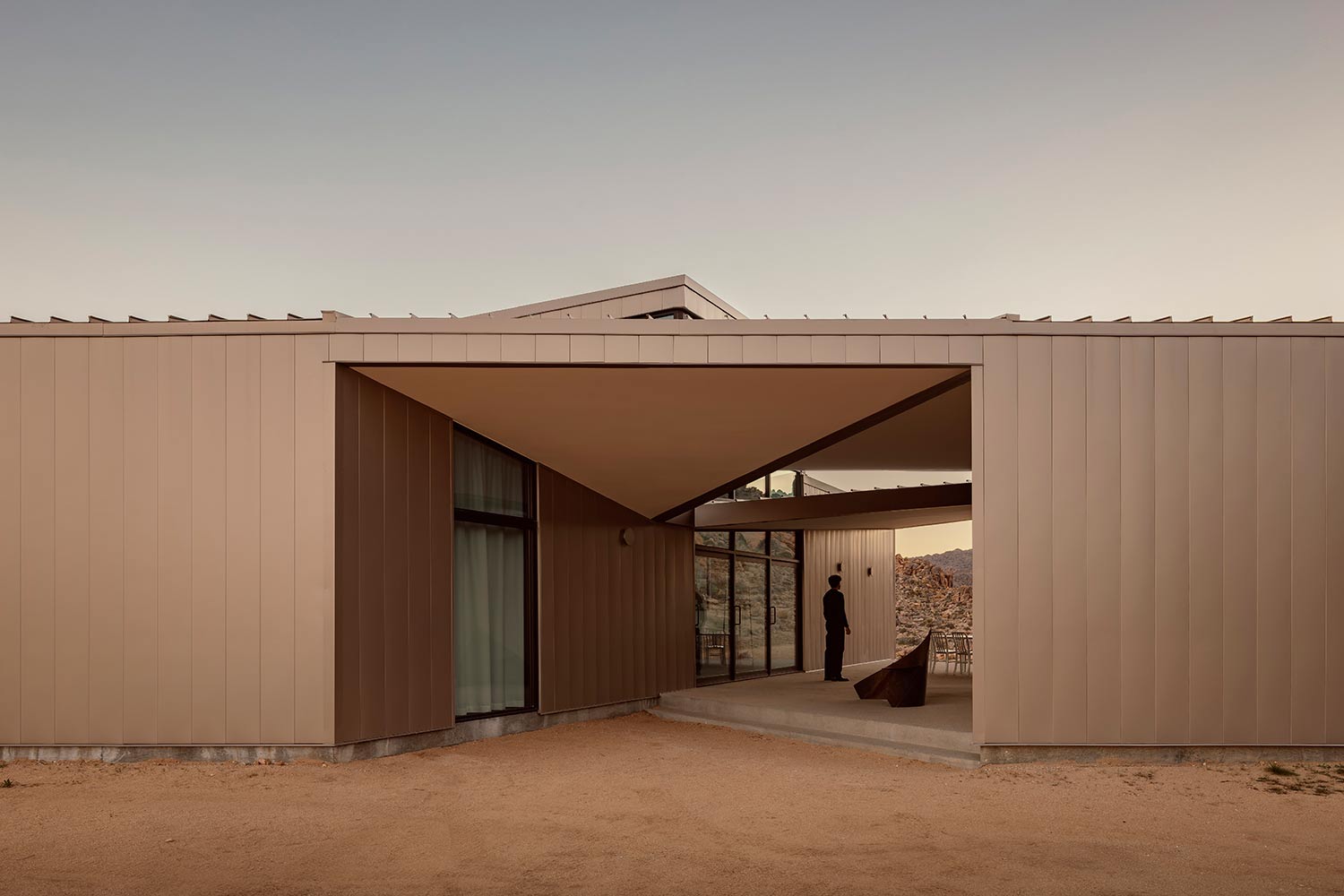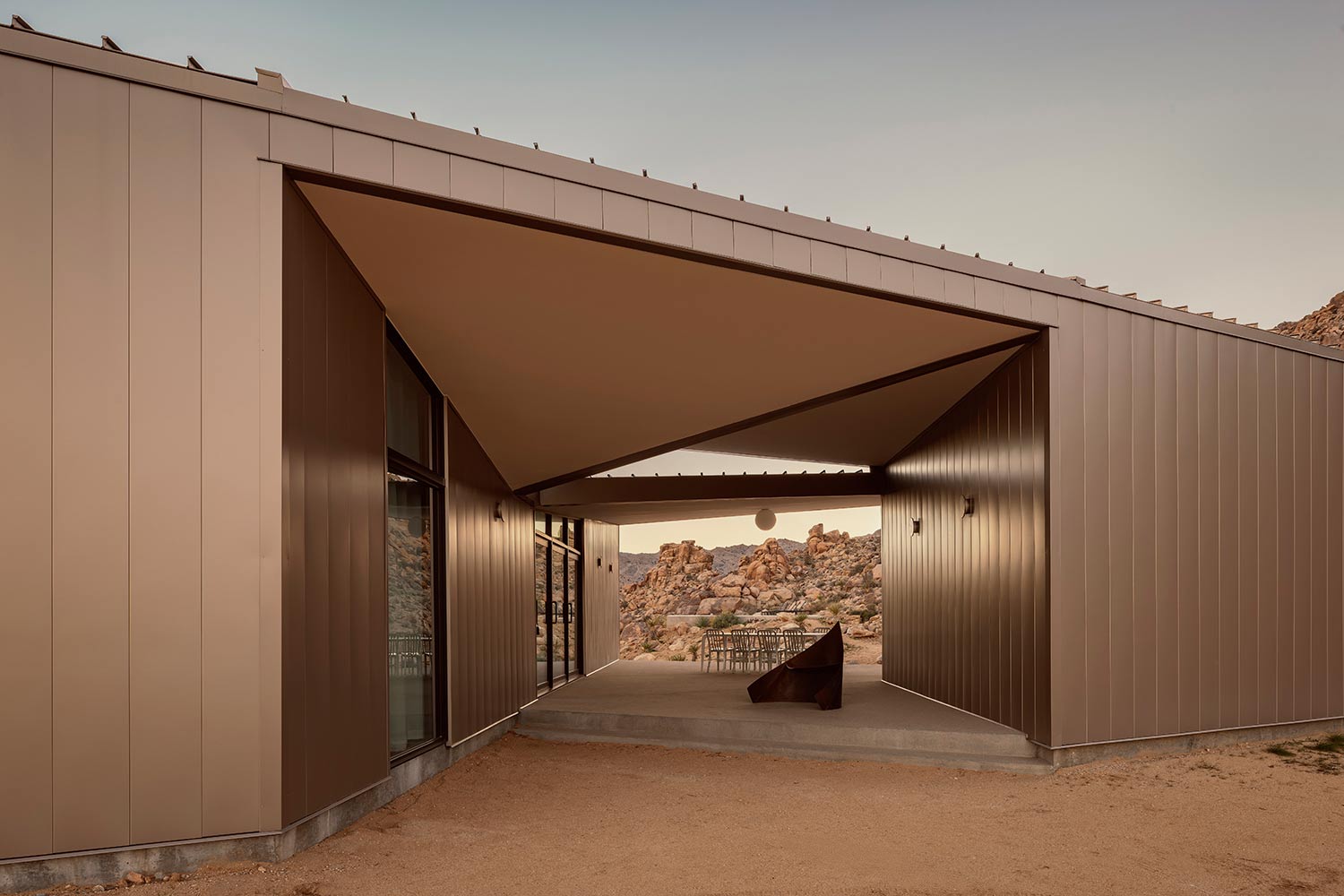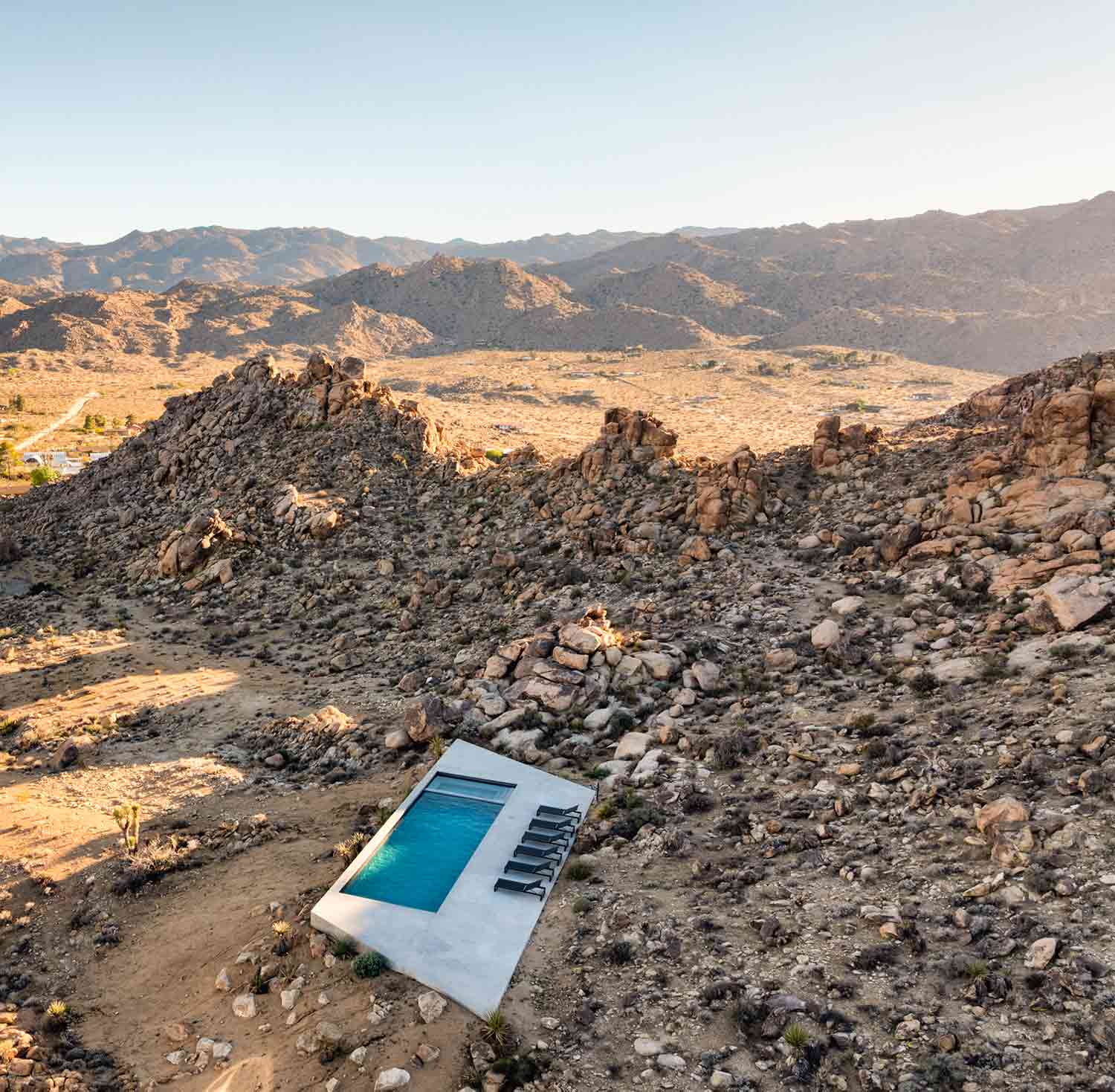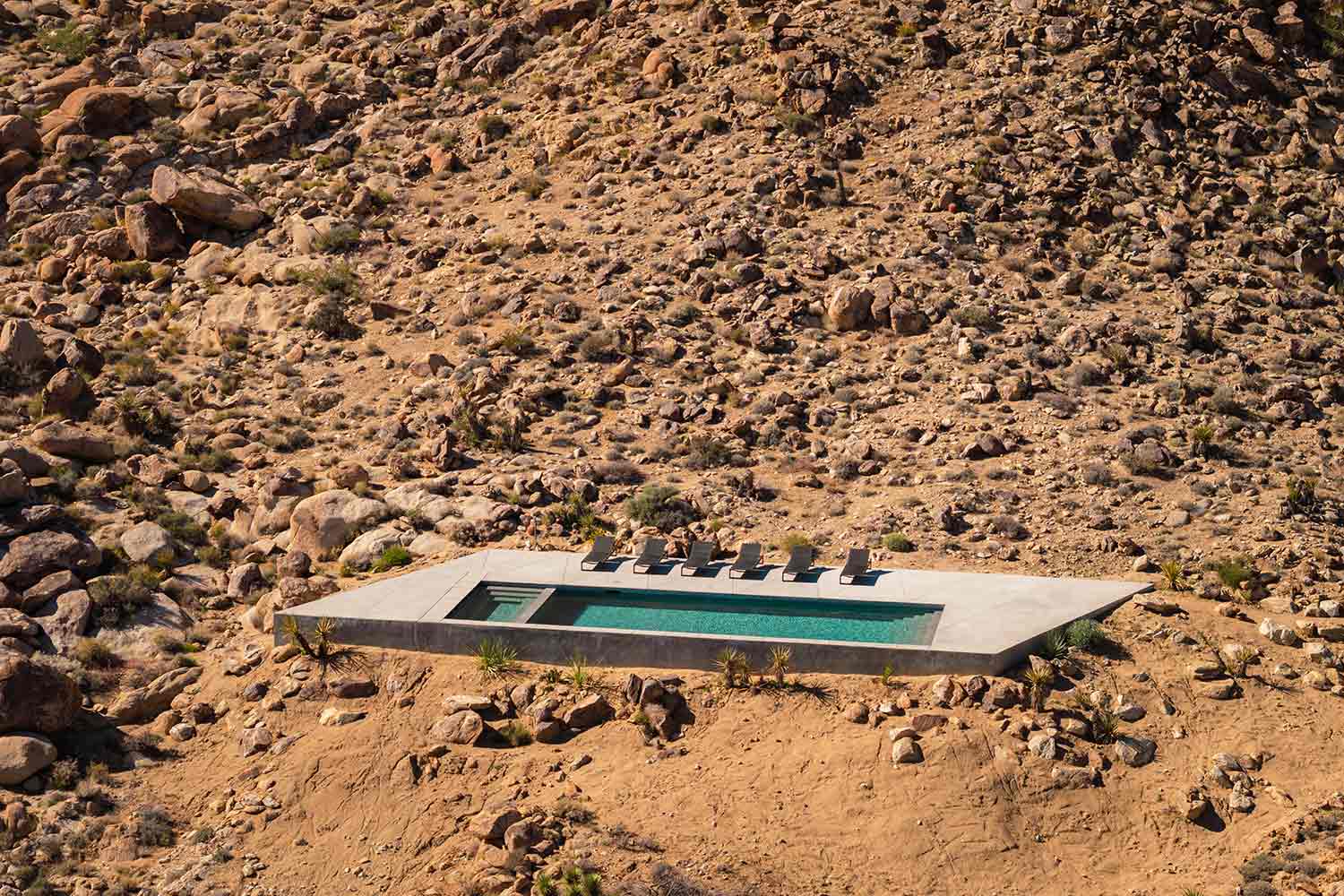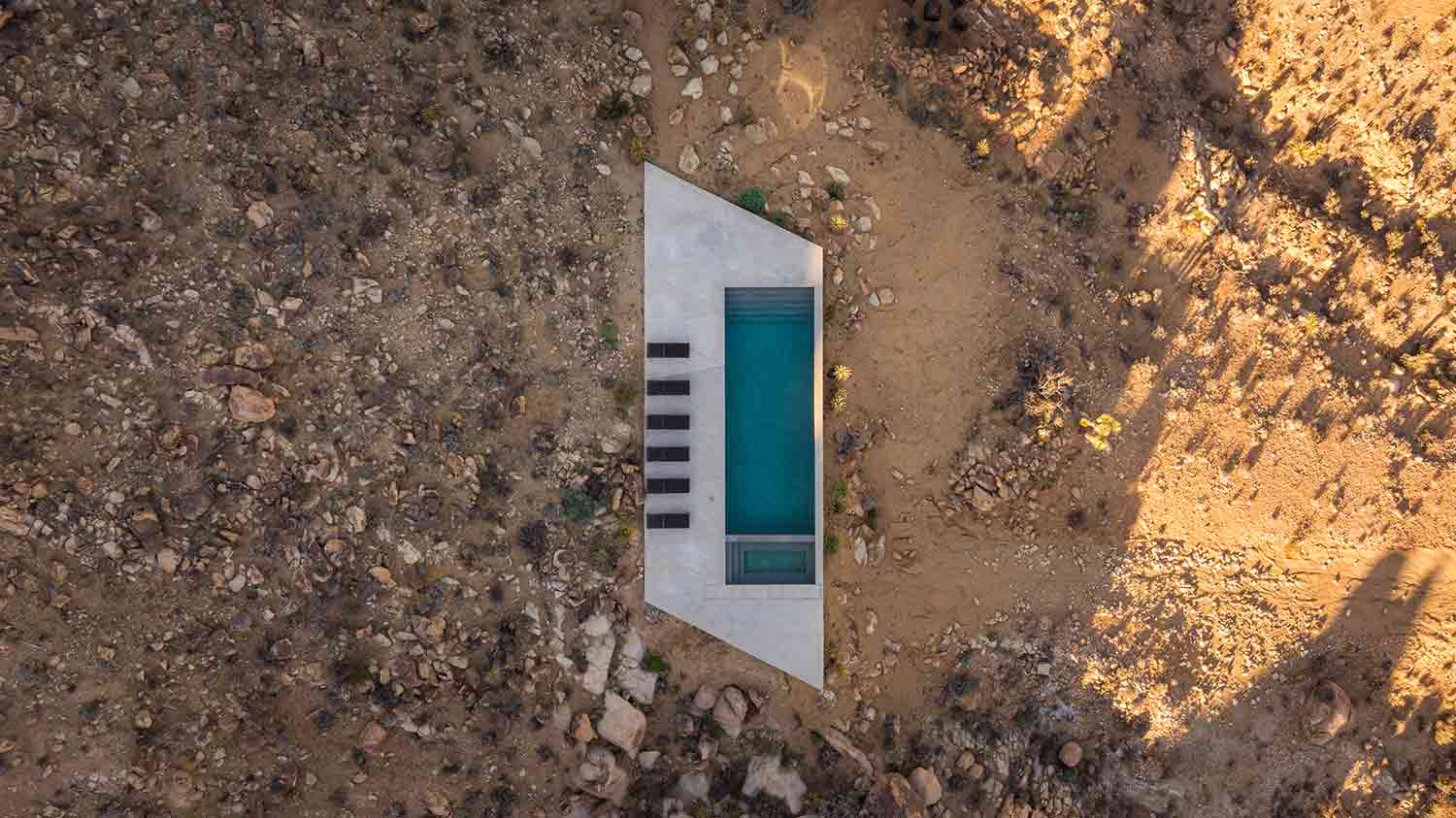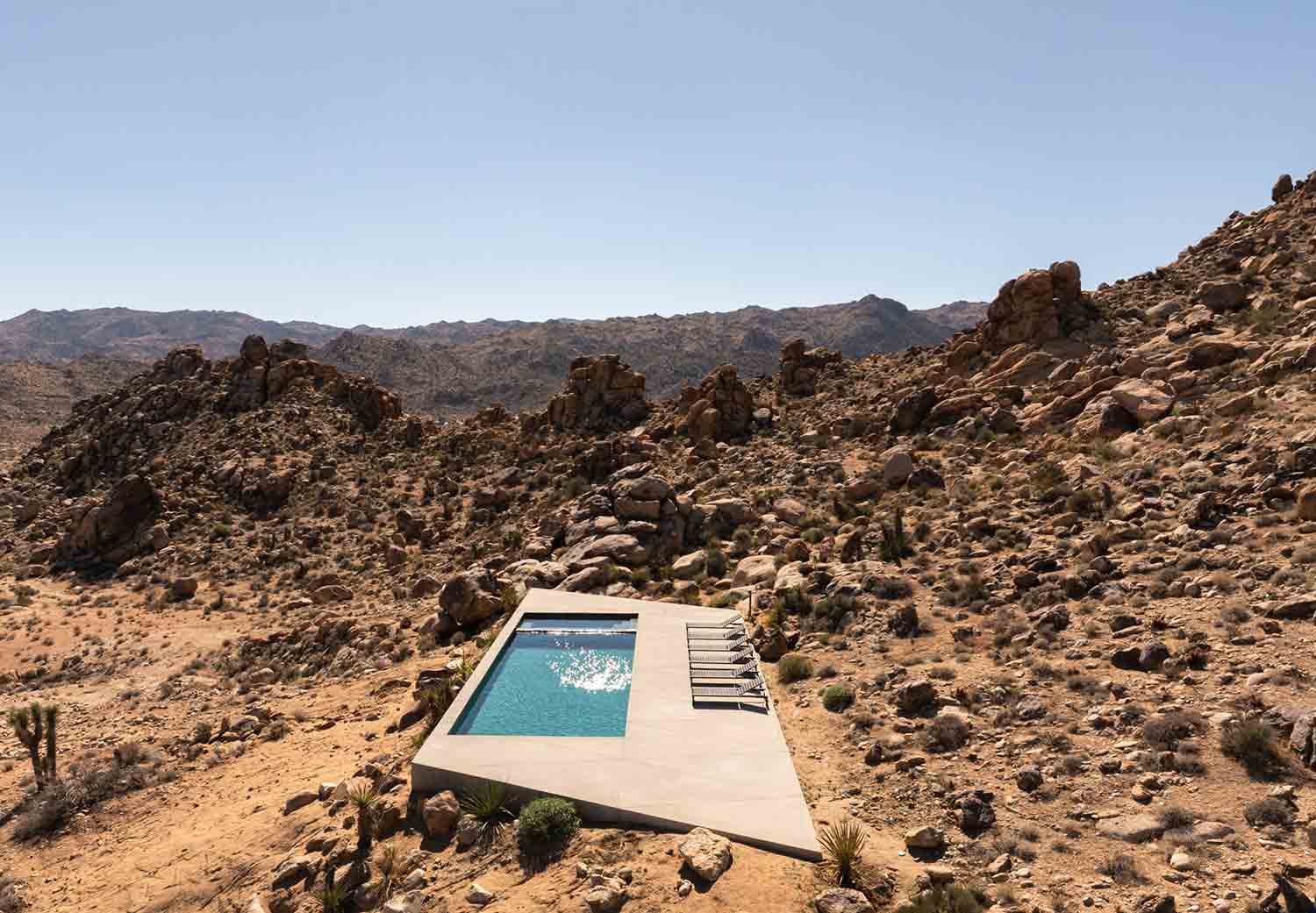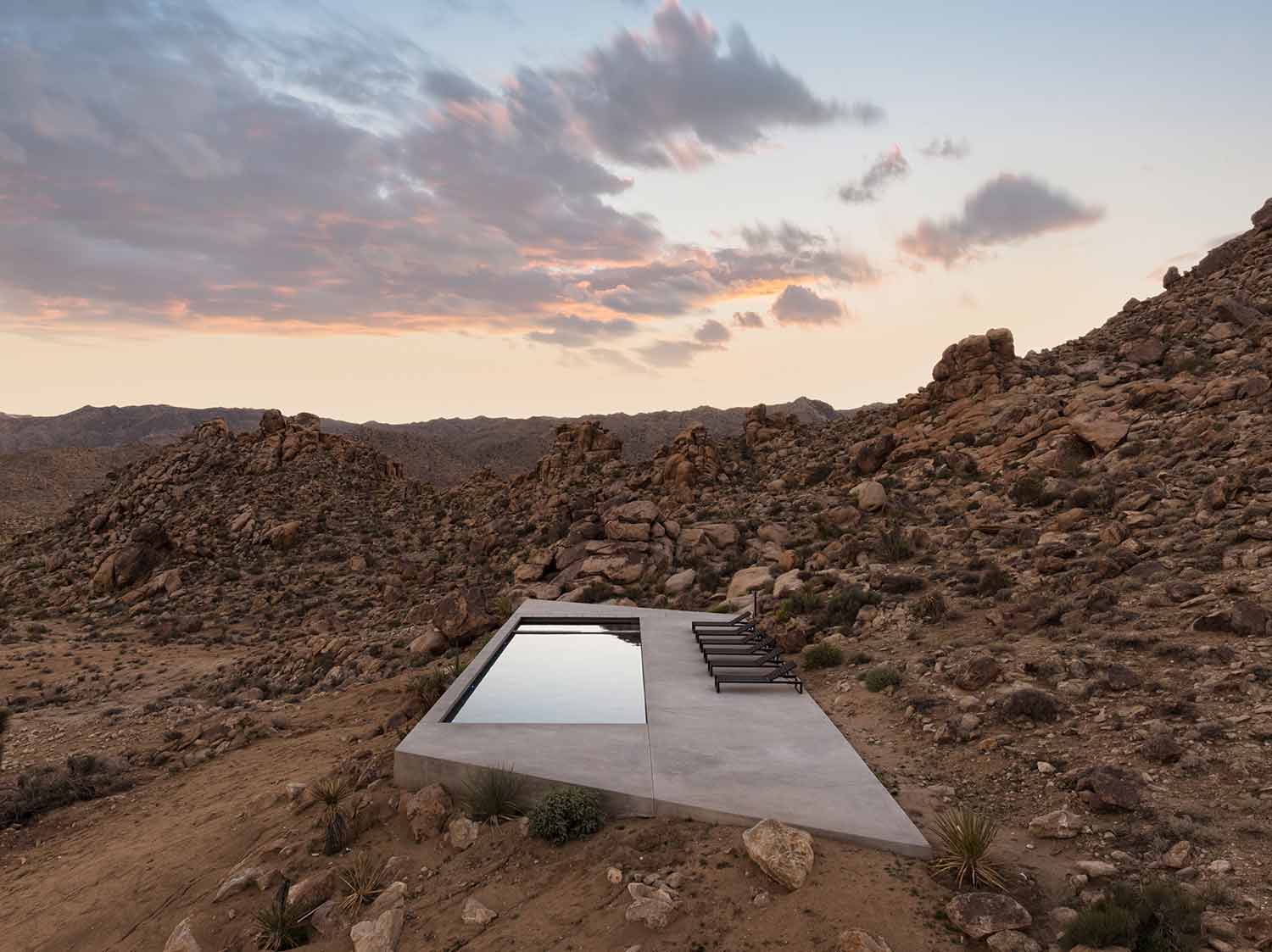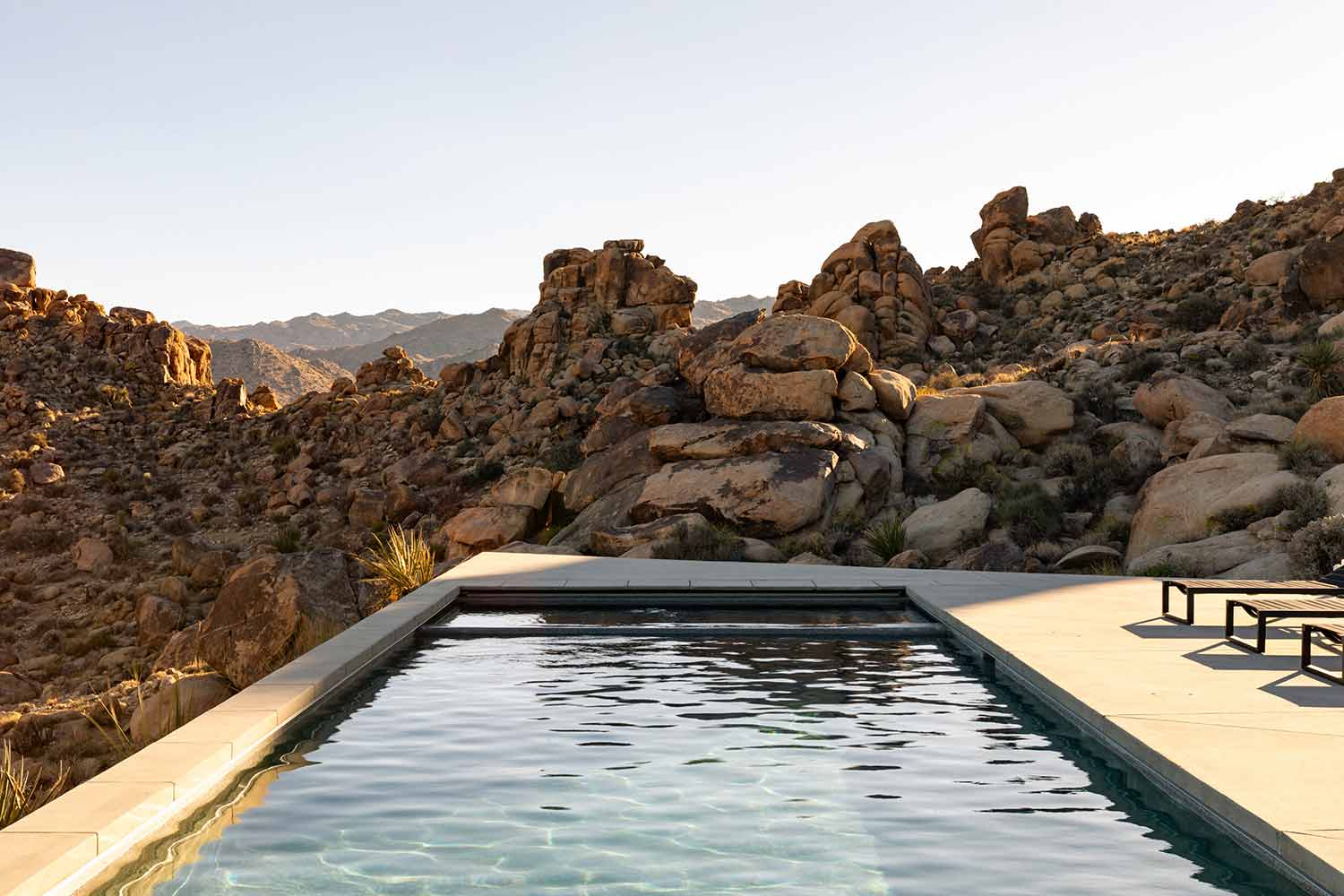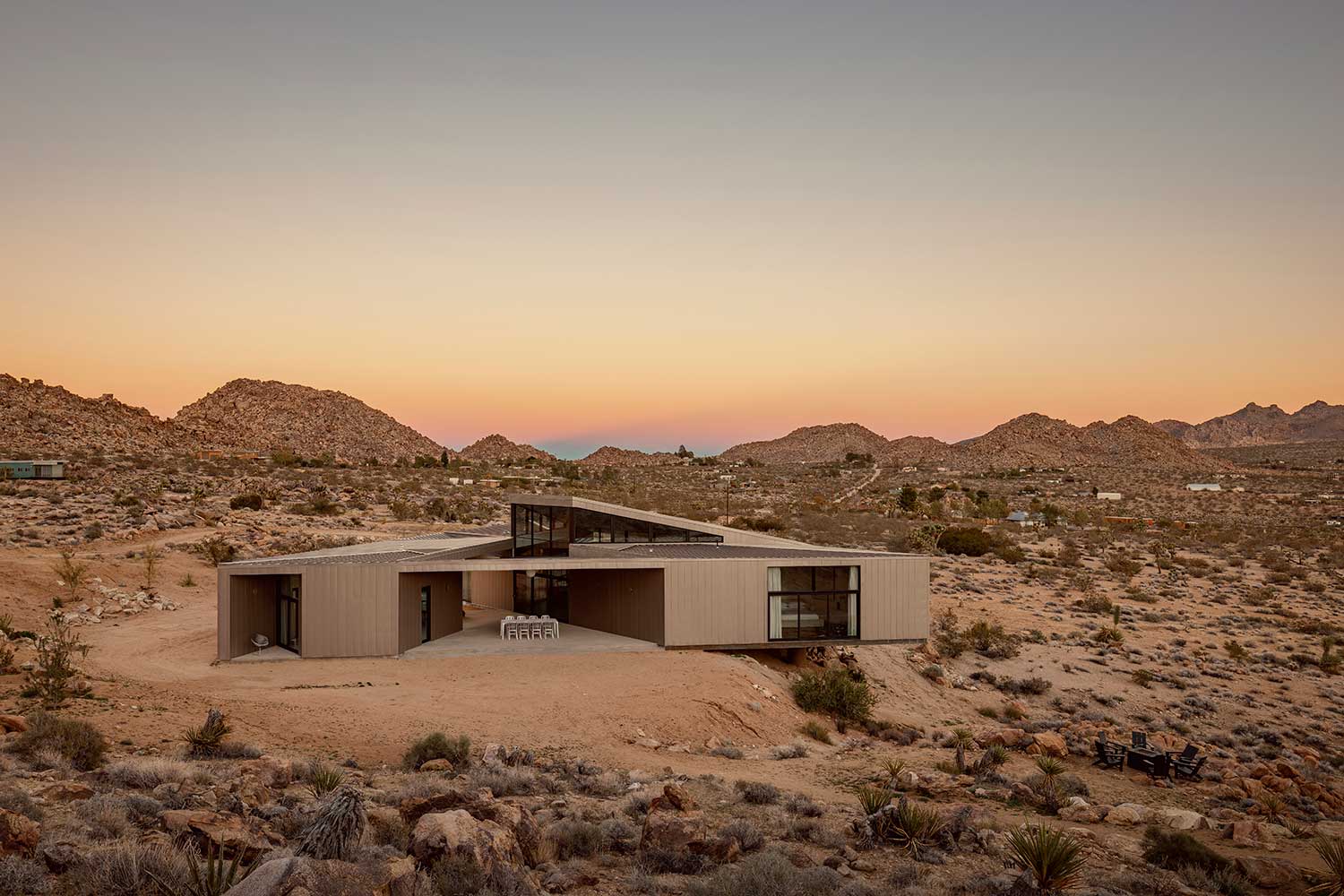
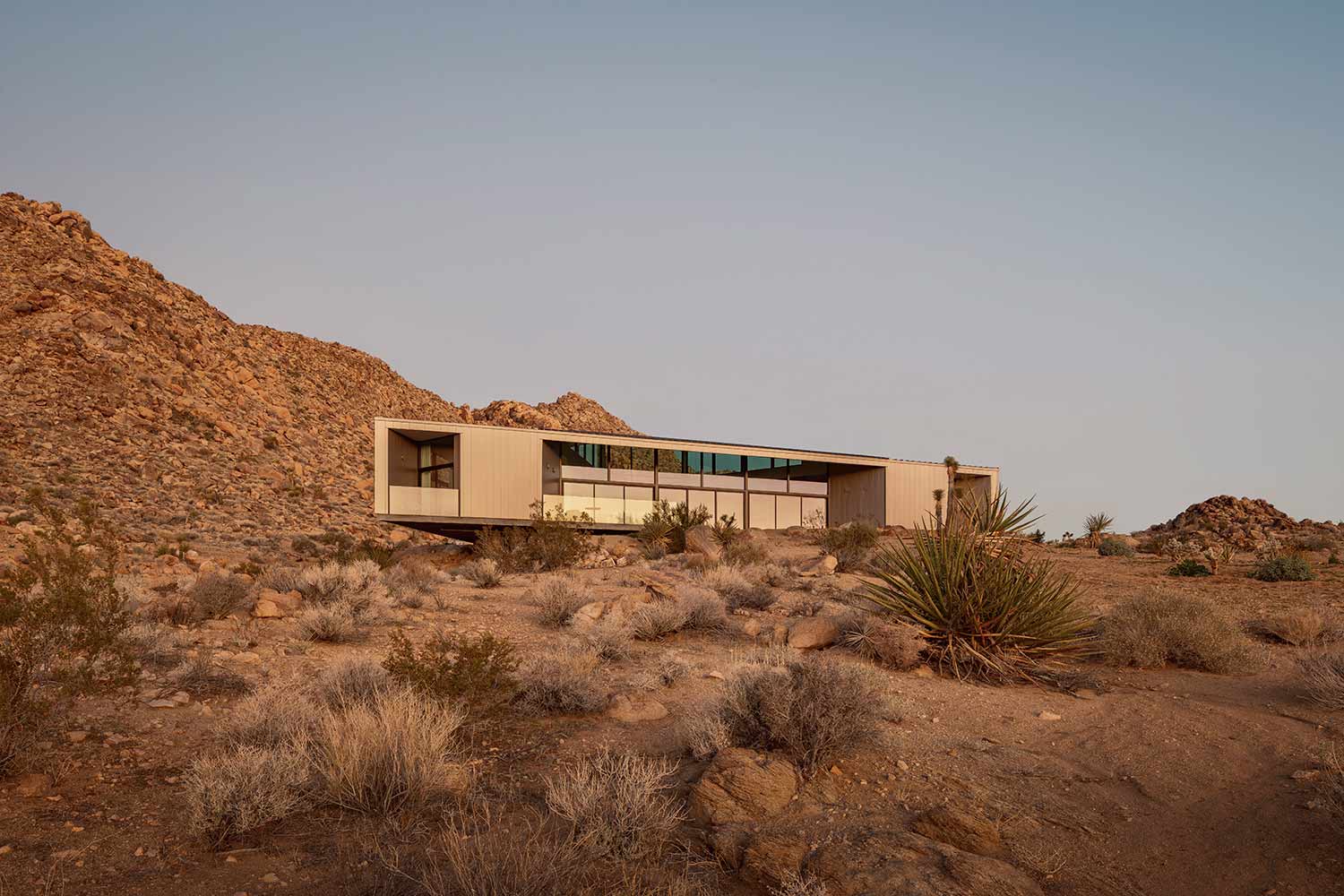

Built right on the edge of Joshua Tree National Park, the Desert Shadow House is conceived as a light architectural presence that engages in a constant dialogue with its vast surroundings and infinite horizons of arid landscape.
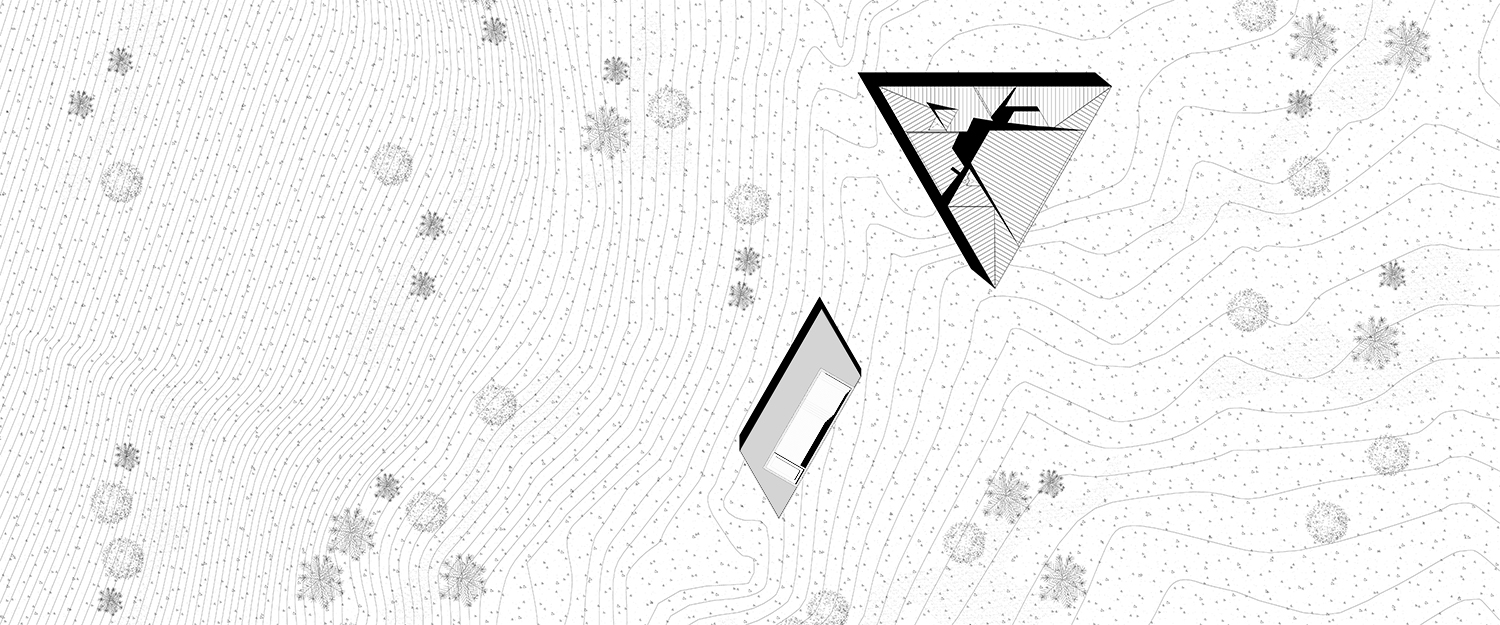
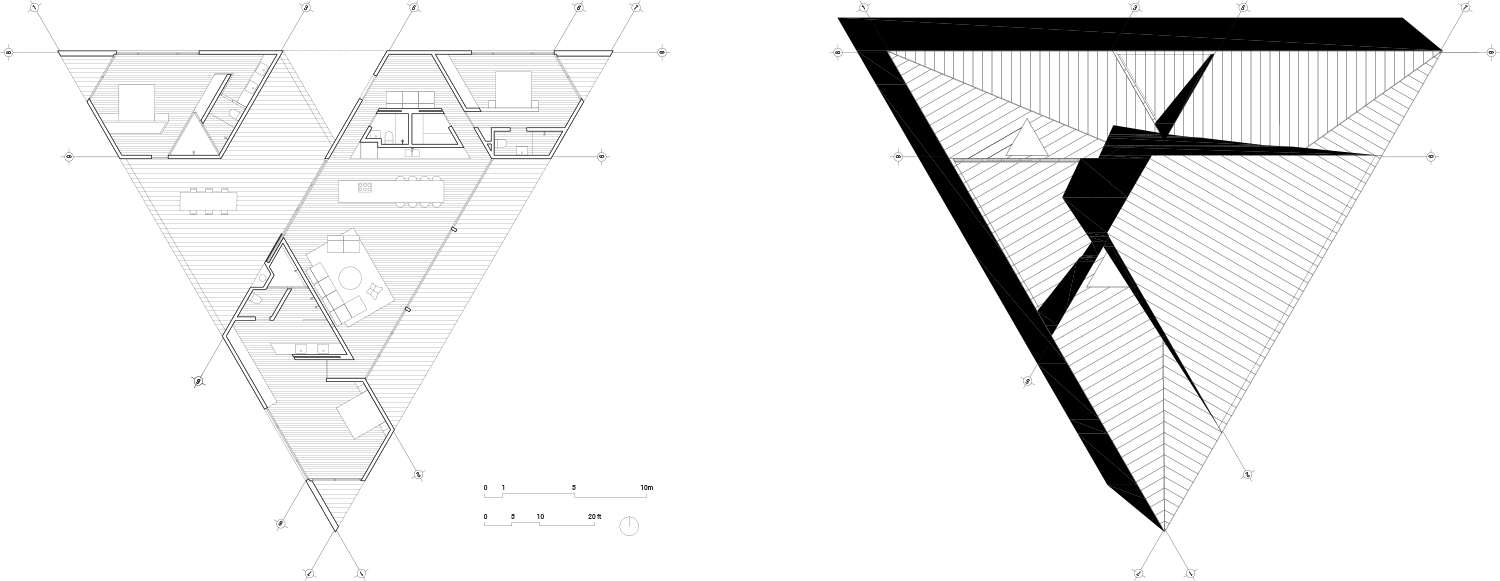
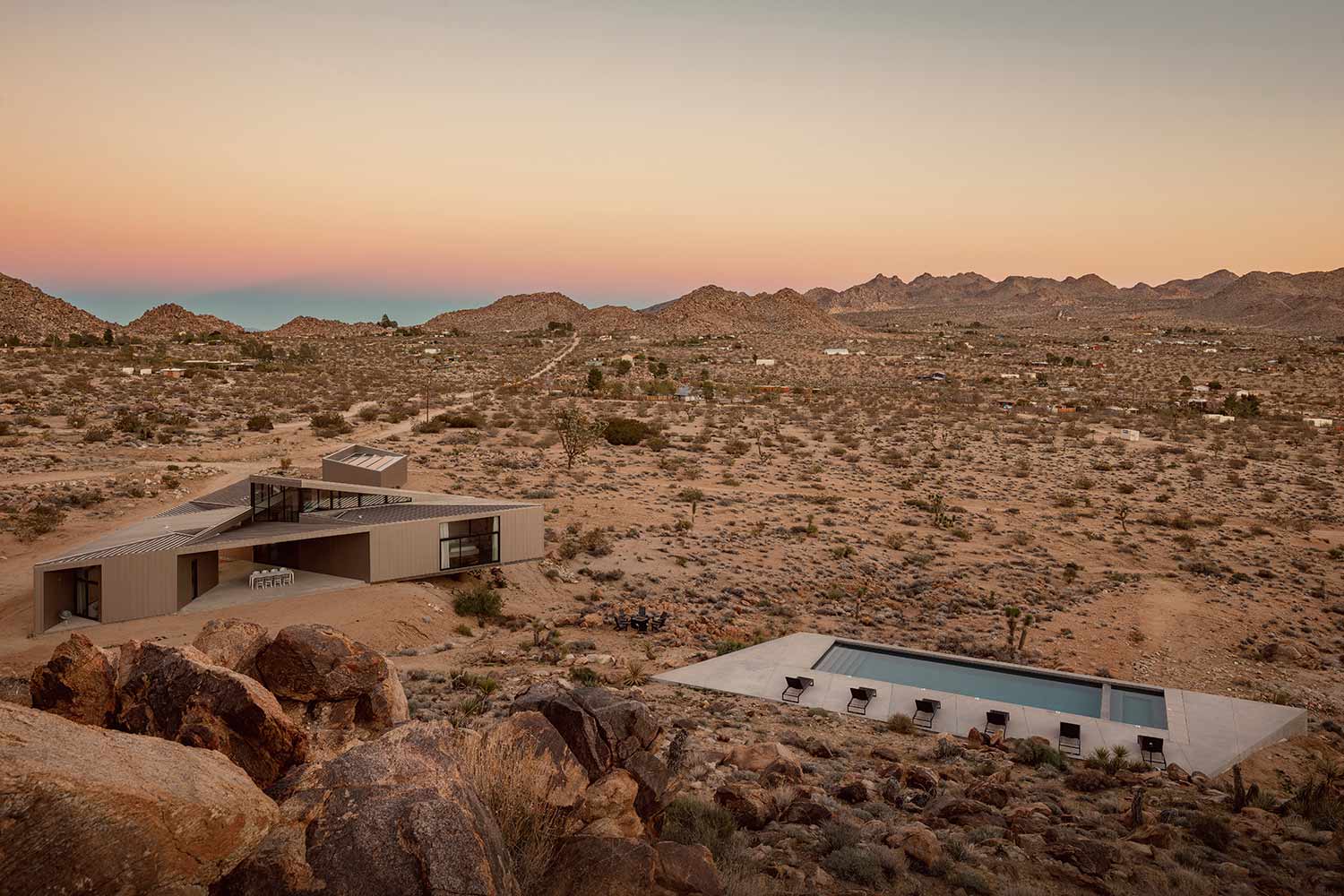
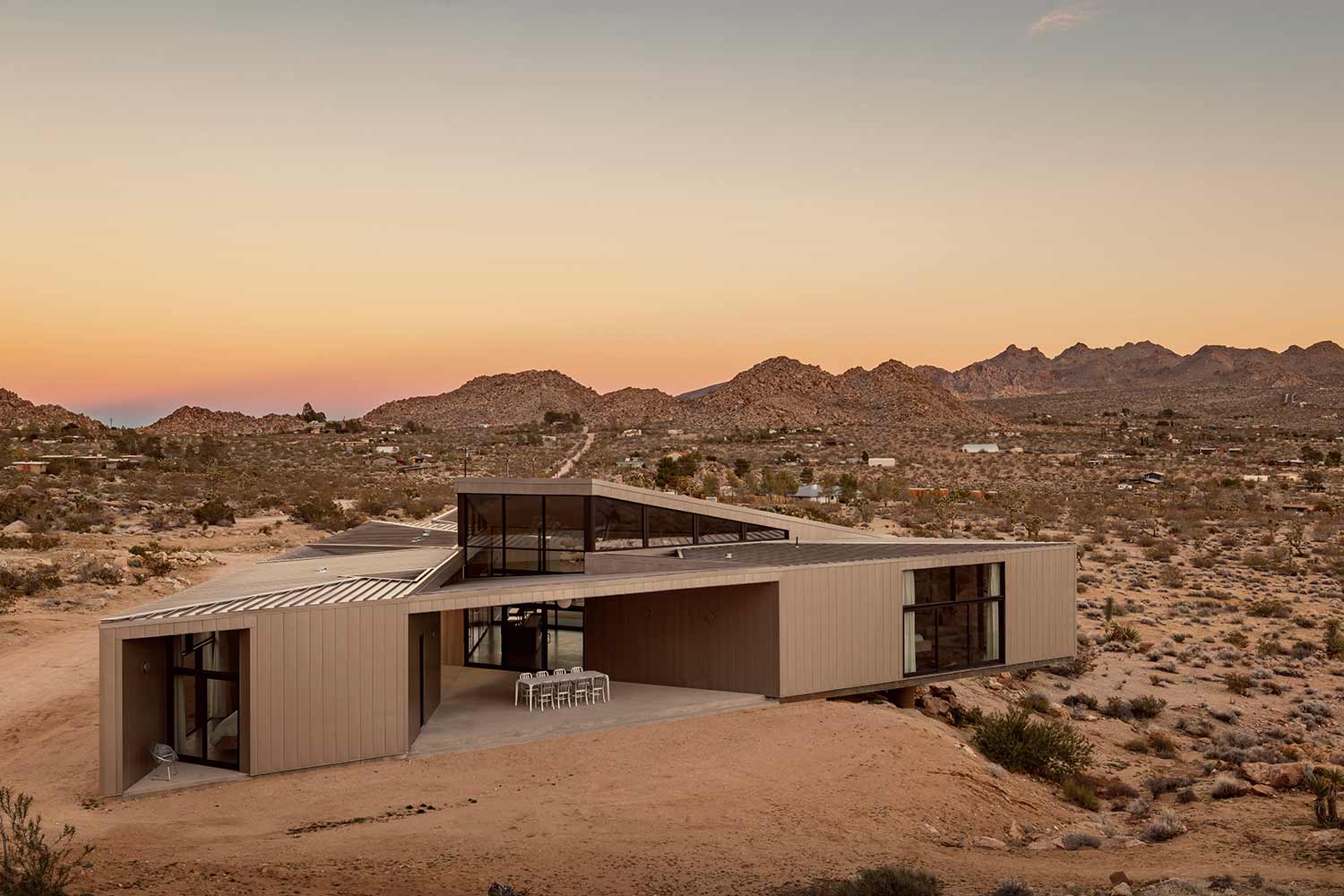
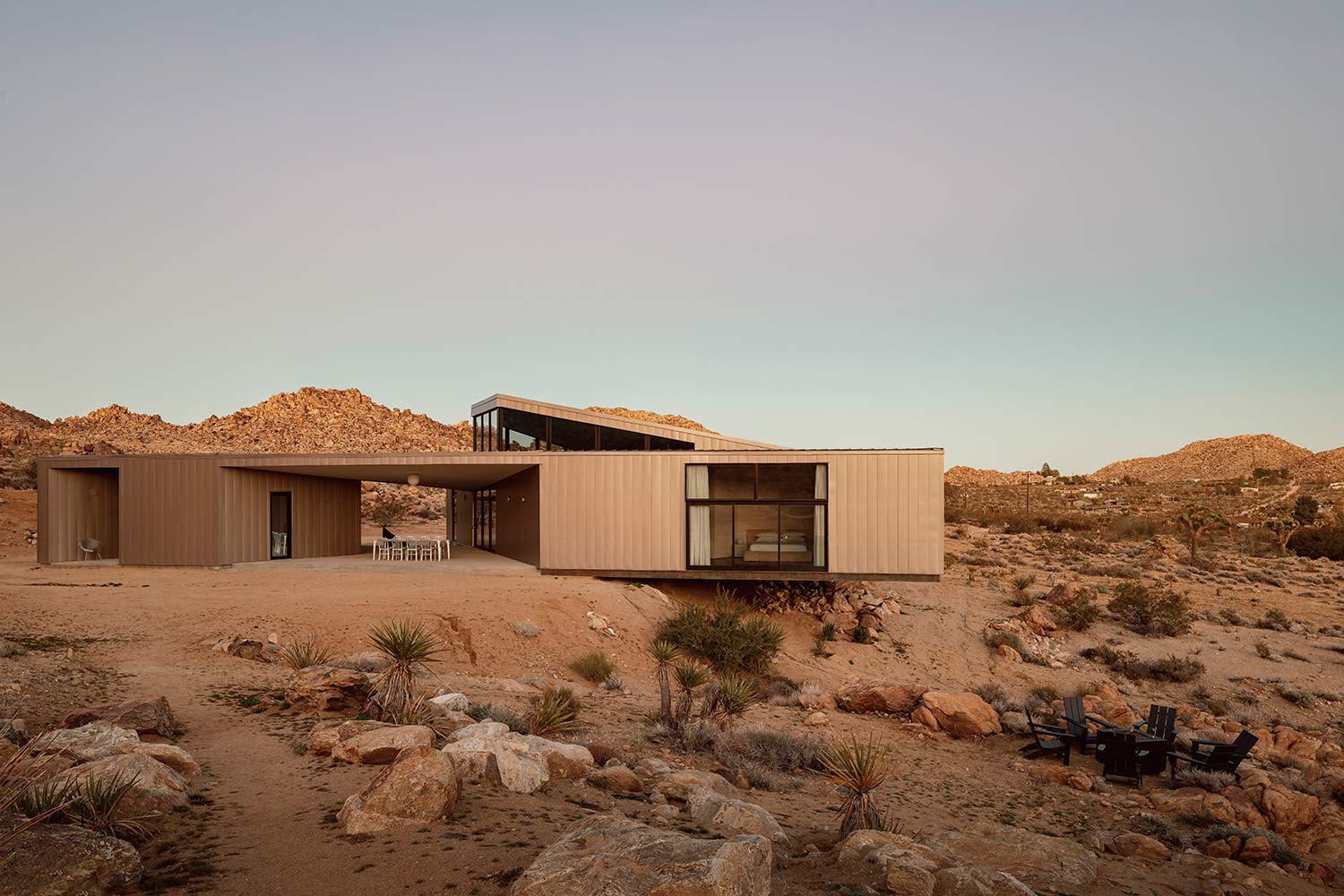
The project is defined by a triangular geometry, a formal and strategic decision that allows the house to open toward multiple directions, establishing a continuous relationship with a 360-degree environment dominated by rocky formations and distant mountains. This geometry not only defines the form of the house, but also organizes its orientation, implantation, and spatial experience.
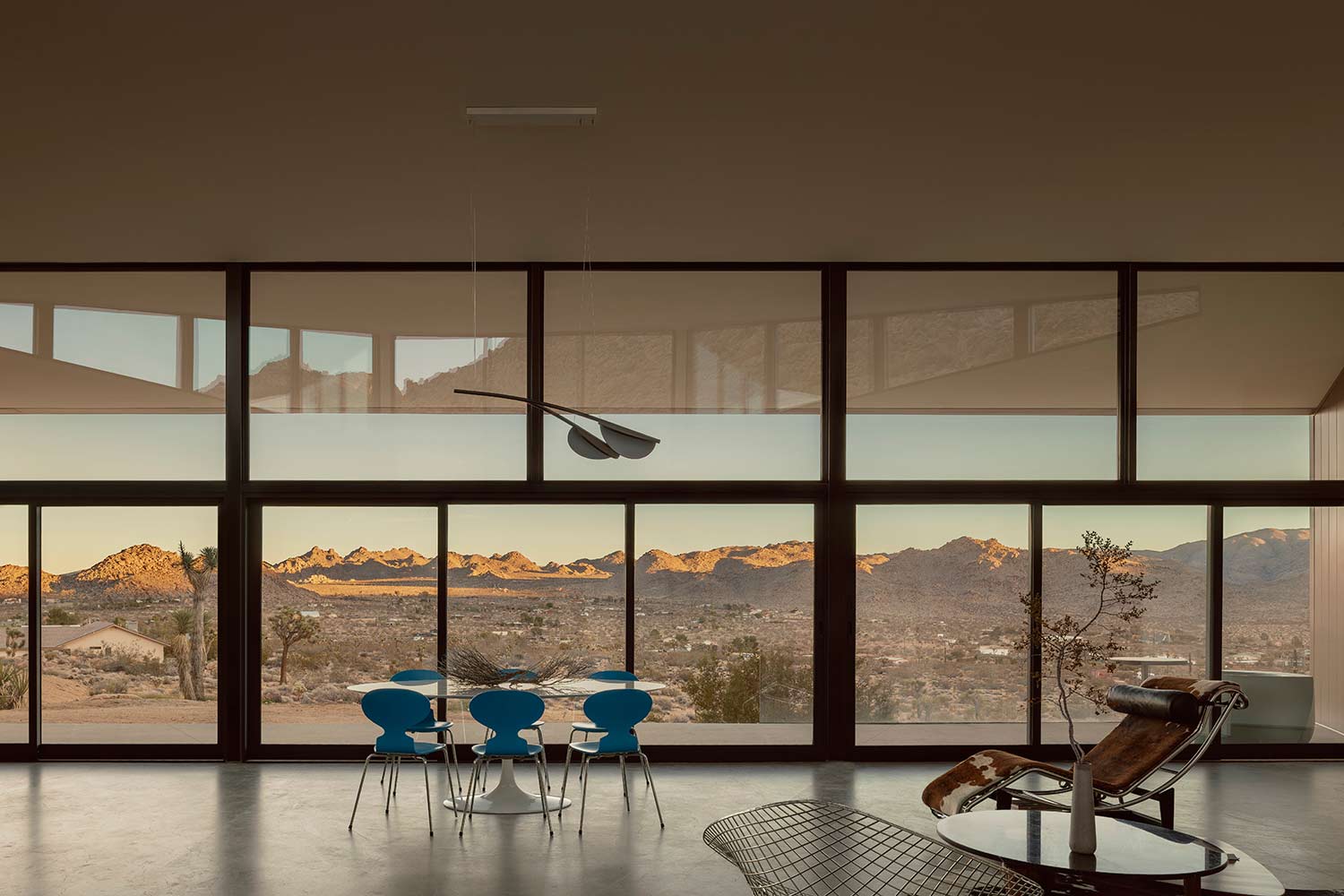
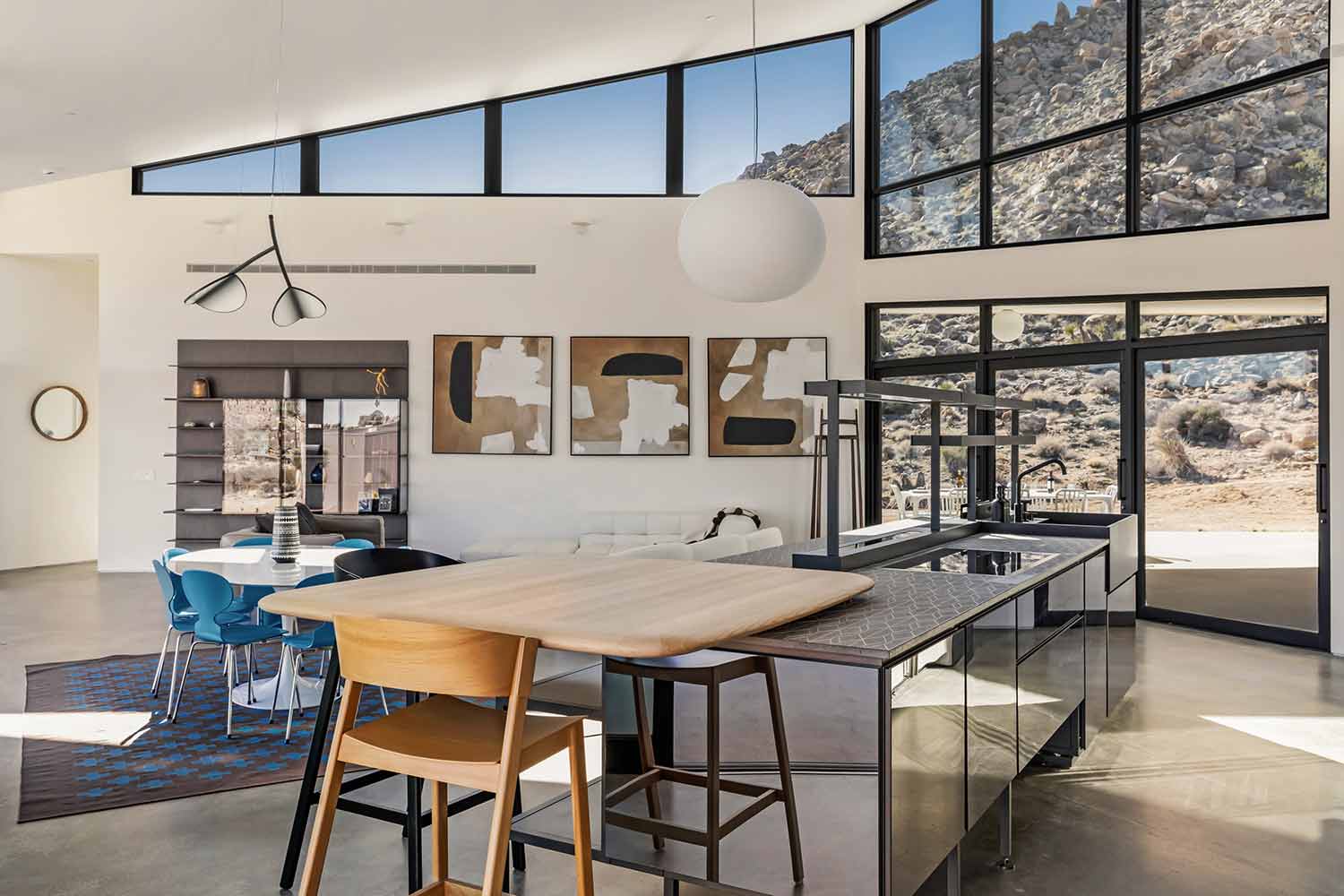
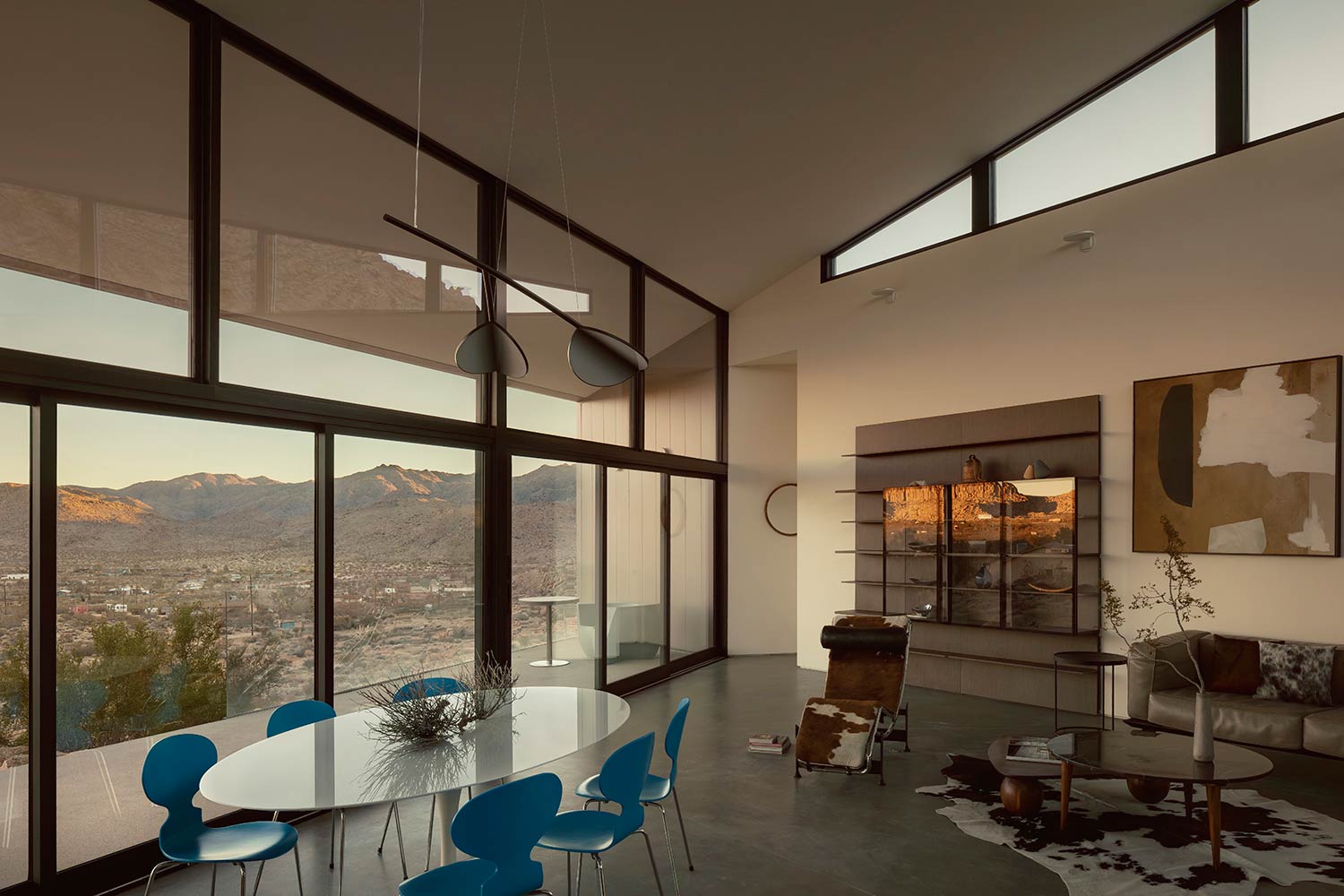
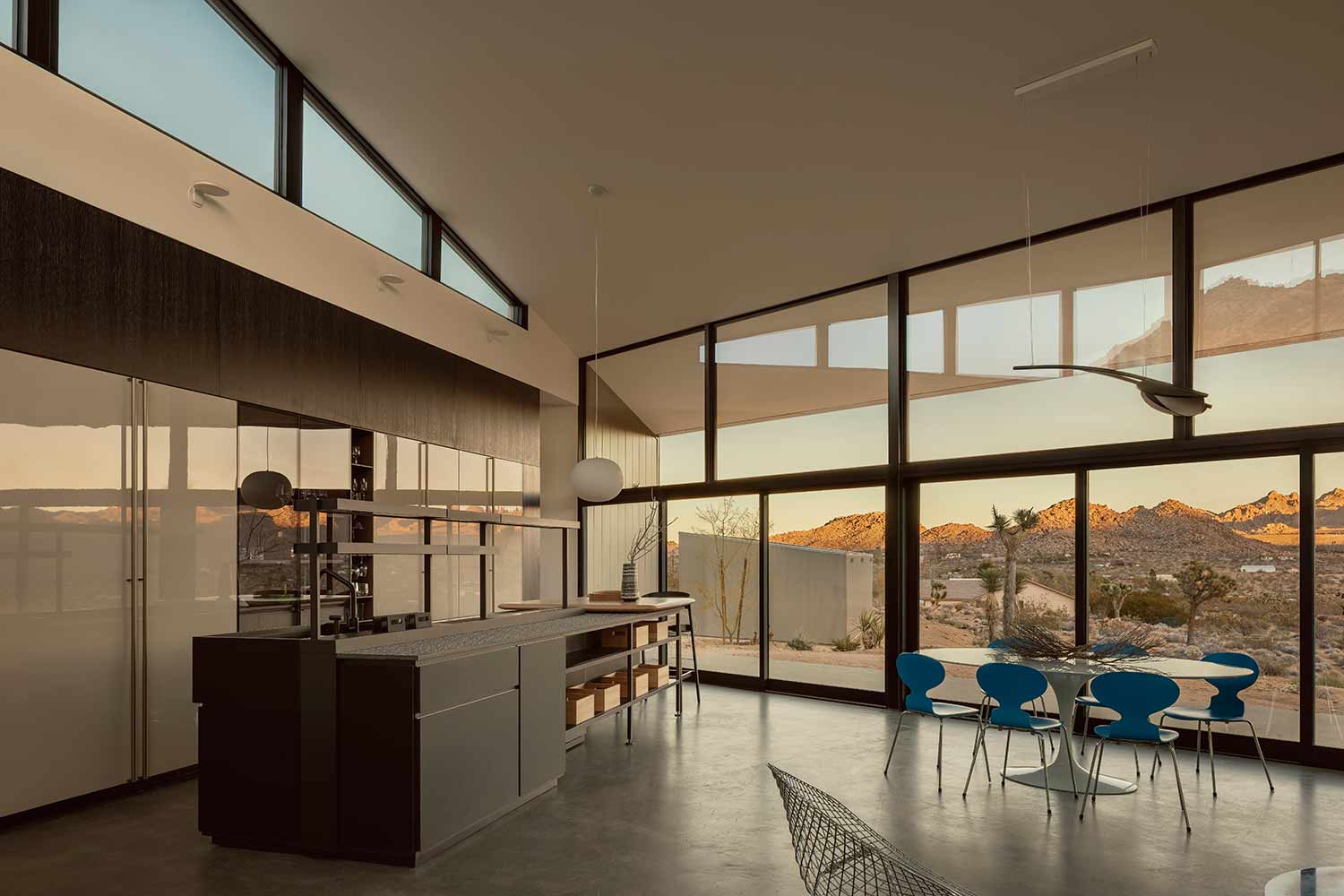
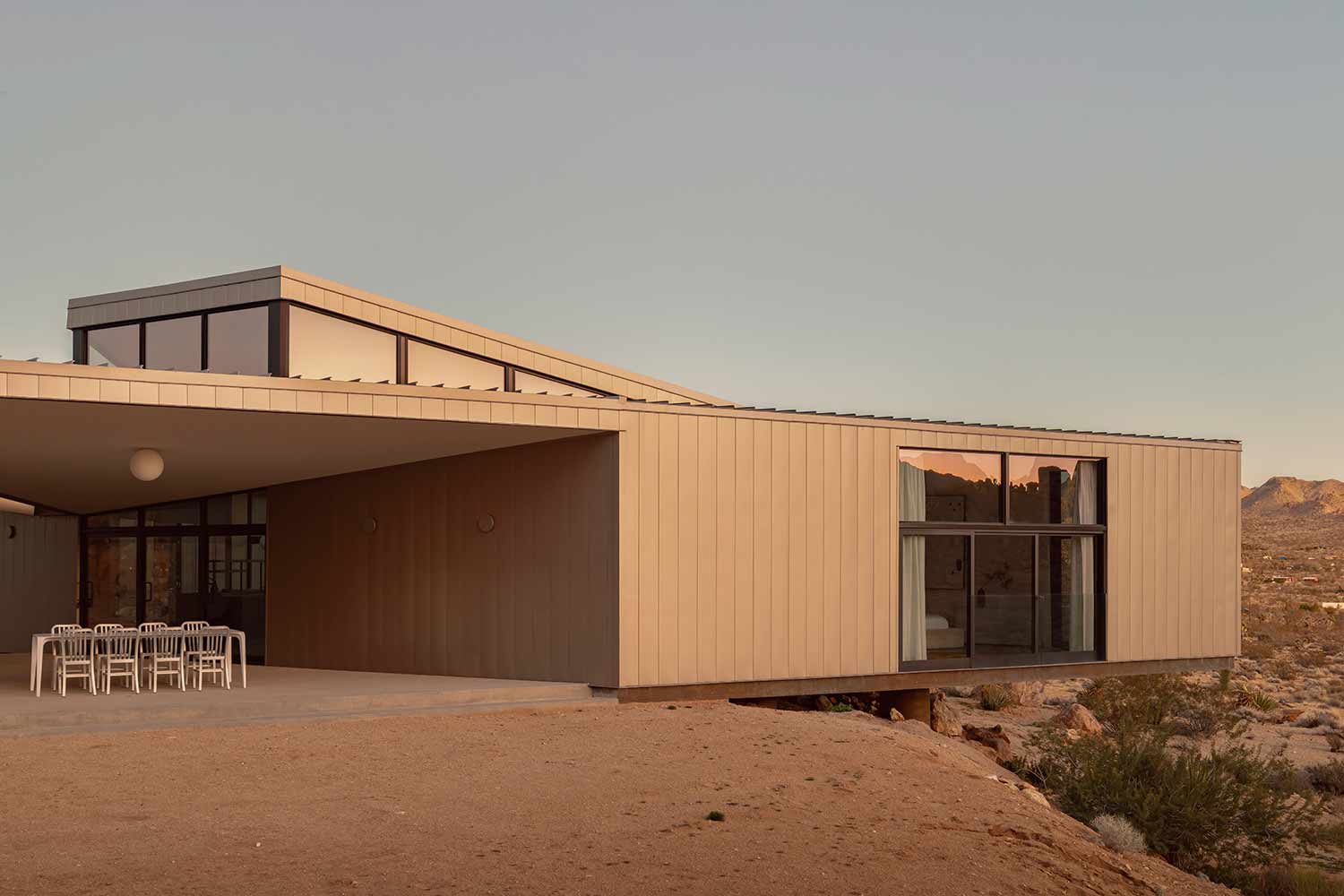
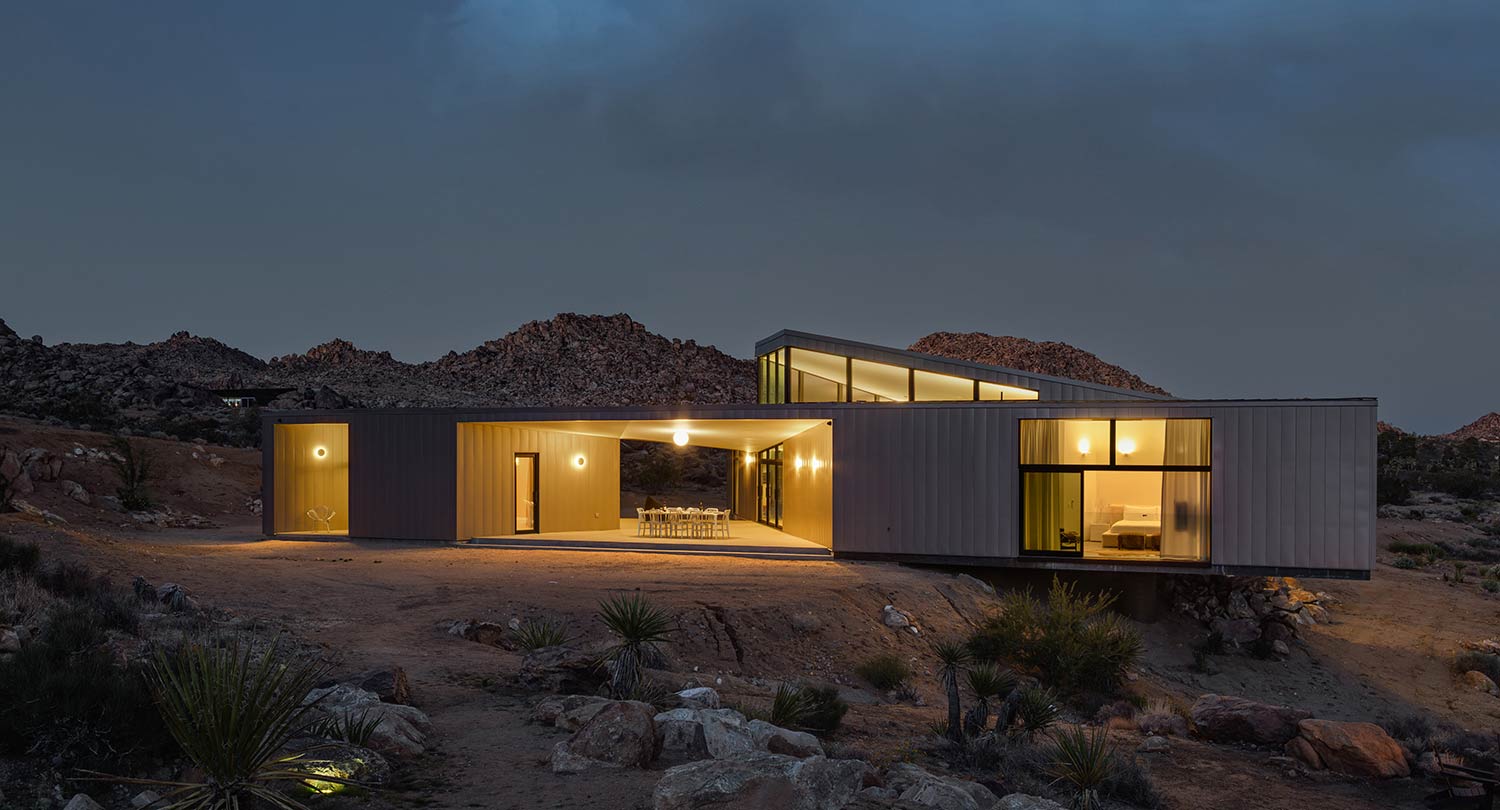
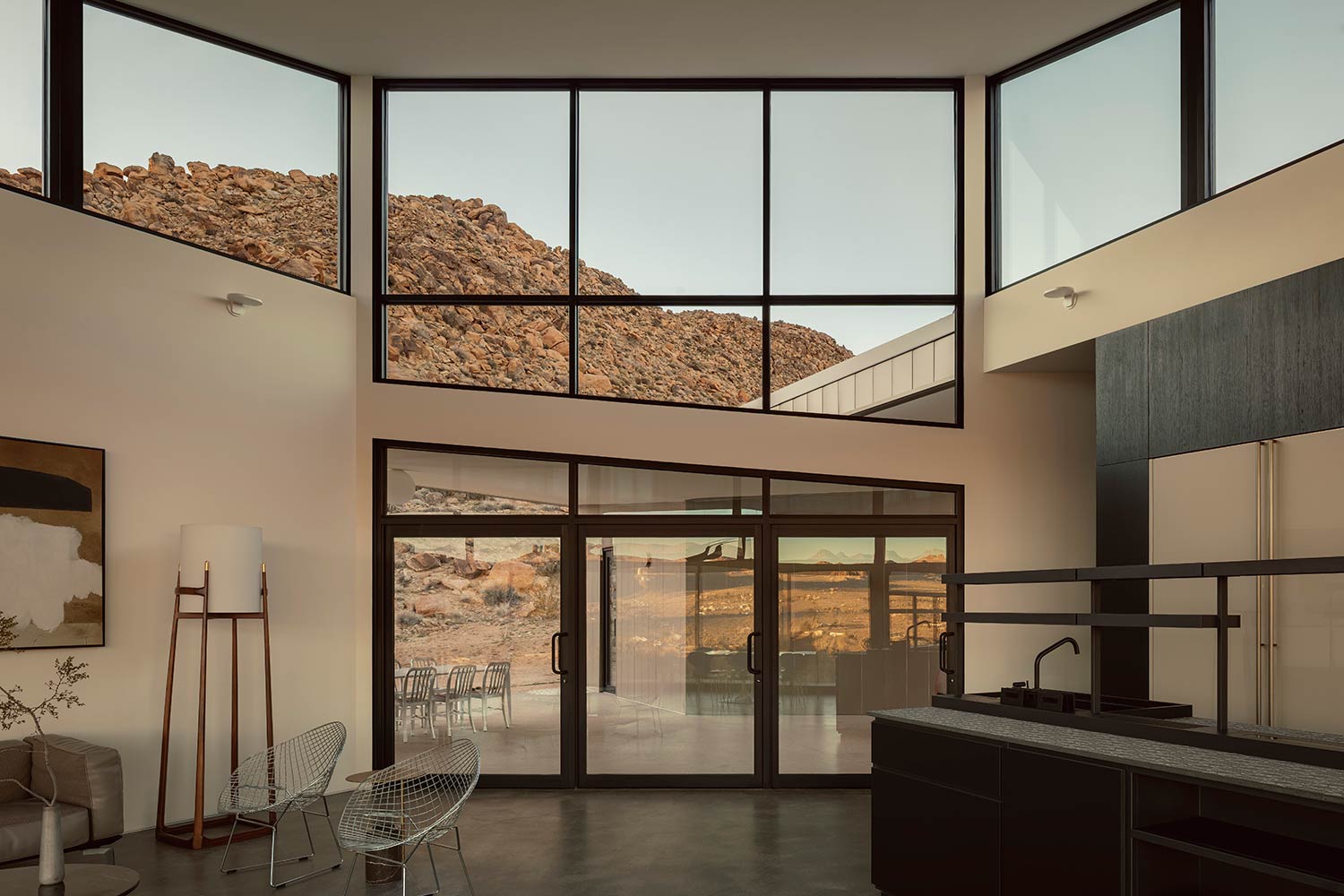
The house is organized around two closely linked public areas, one open and the other enclosed, both conceived as a continuous indoor-outdoor living system. The open-plan living-dining-kitchen area functions as the social hub of the house and unfolds as a single, fluid space, bathed in natural light and framed by large windows overlooking the rocky desert landscape. This interior space extends directly into a large covered outdoor terrace, designed as a shaded living area essential for inhabiting the desert climate.
Despite their contrasting conditions—one enclosed and one open—both spaces are perceived and inhabited as a single spatial entity, where boundaries dissolve and daily life flows seamlessly between inside and outside. The terrace becomes a central architectural element, where shade becomes an architectural element, allowing a protected yet direct relationship with the surrounding landscape.
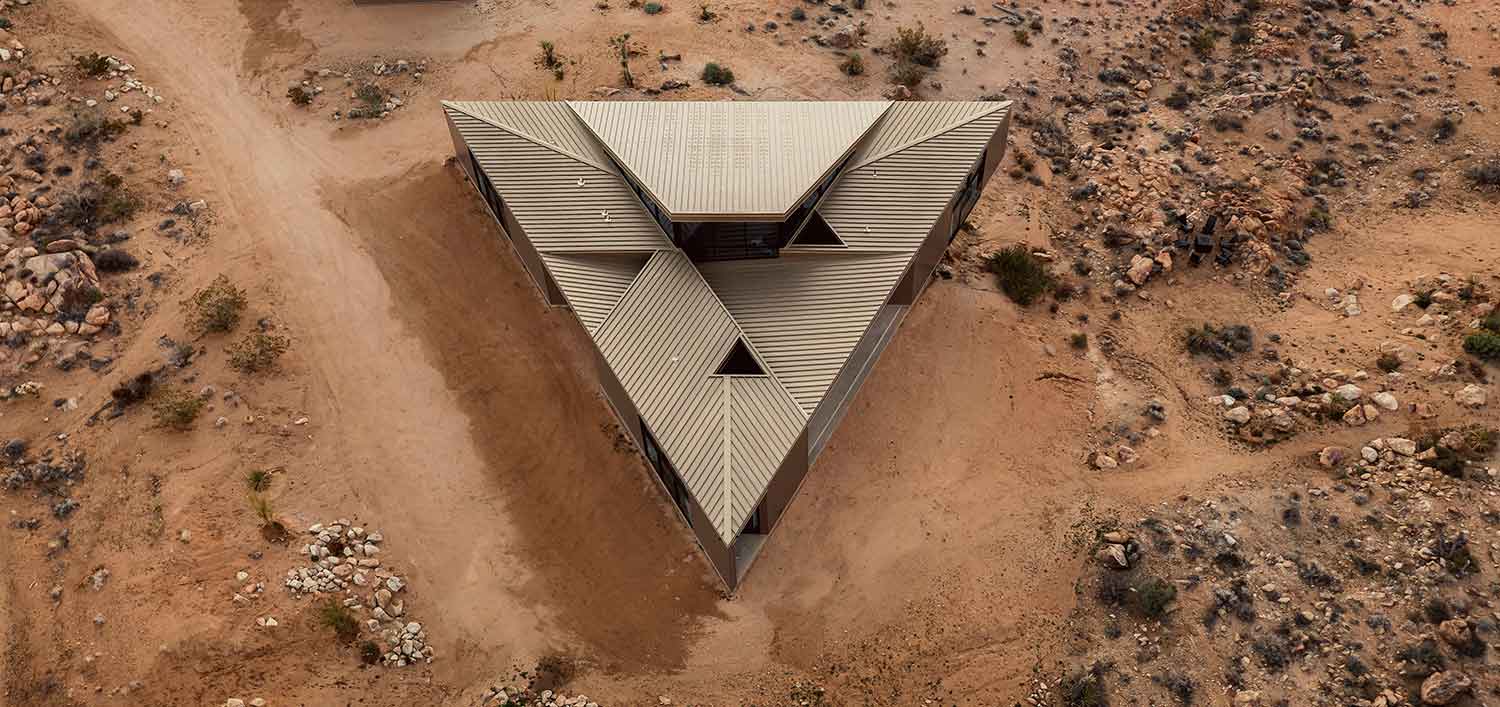
The roof rises and falls in response to the stimuli of its immediate surroundings. Its openings and large windows introduce controlled zenithal light and establish a direct connection with the sky and the surrounding mountains. This strategy reinforces the interior atmosphere, where light, shadow, and landscape shape the experience of living.
The house sits lightly on the ground, rising by means of a cantilever on one of its sides to reduce the impact on the natural ground and to reinforce the perception that the house floats above the desert landscape.
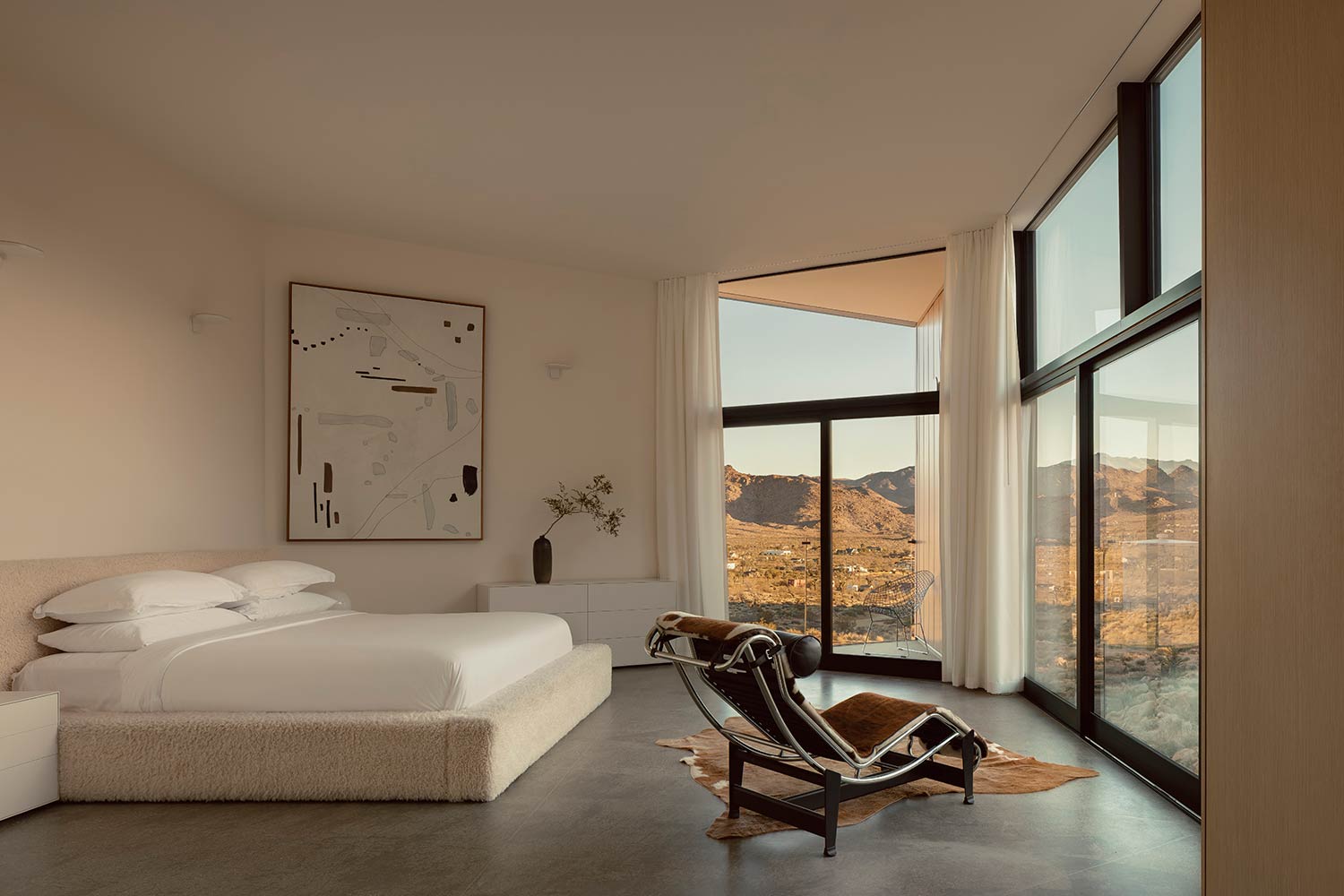
Materiality plays a key role in this dialogue. A gold-toned aluminum cladding wraps the main volume, allowing the house to reflect and absorb the changing colors of the desert throughout the day, blending chromatically with its environment. Inside, a restrained and continuous material palette serves as a neutral backdrop for light, shadow, and landscape.
The Desert Shadow House does not seek to impose itself on the desert, but rather to inhabit it through shadow, establishing a balance between form, atmosphere, and territory. It is conceived as a contemporary refuge, where architecture becomes a quiet instrument for experiencing the immensity and raw beauty of Joshua Tree